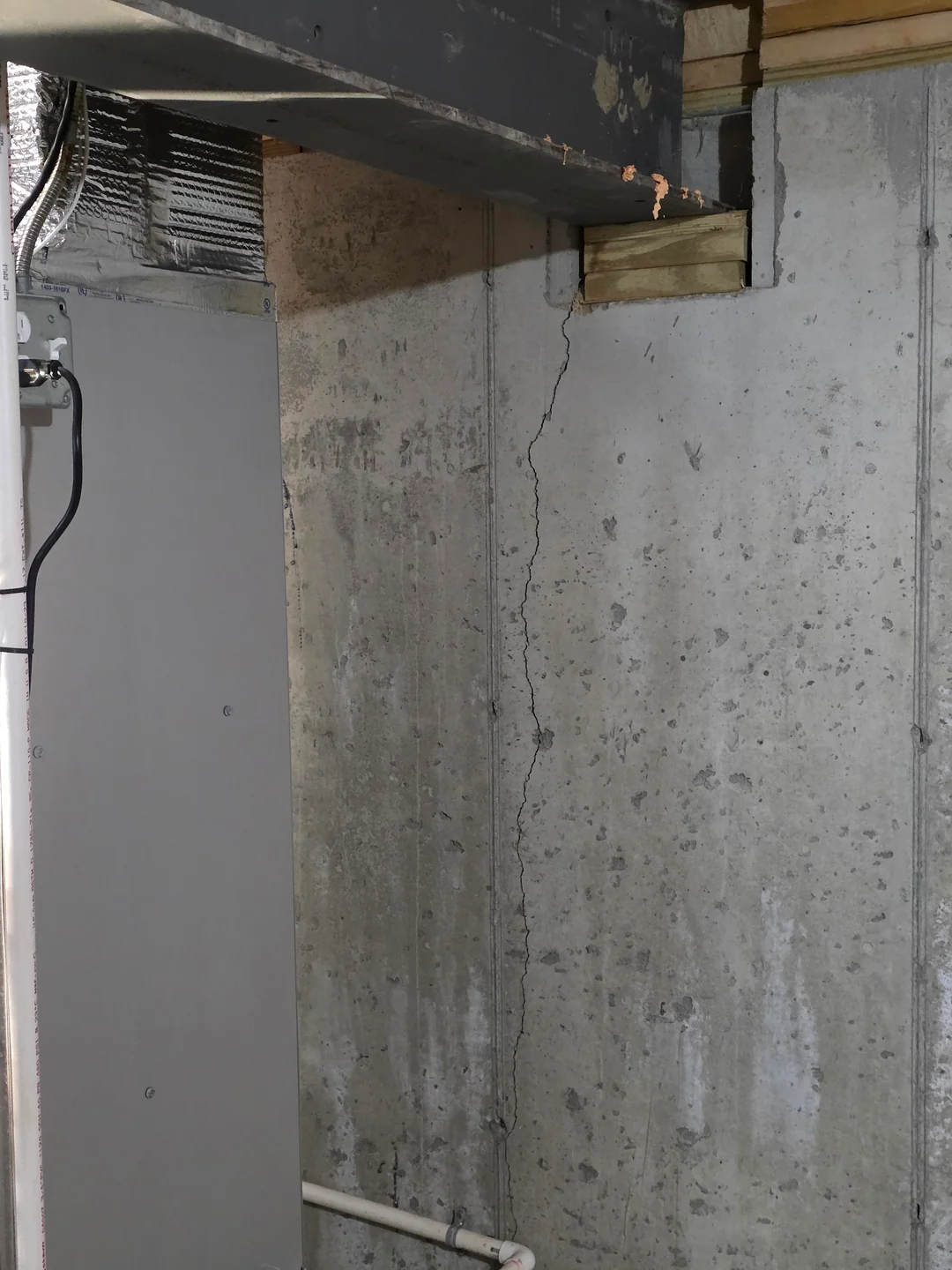
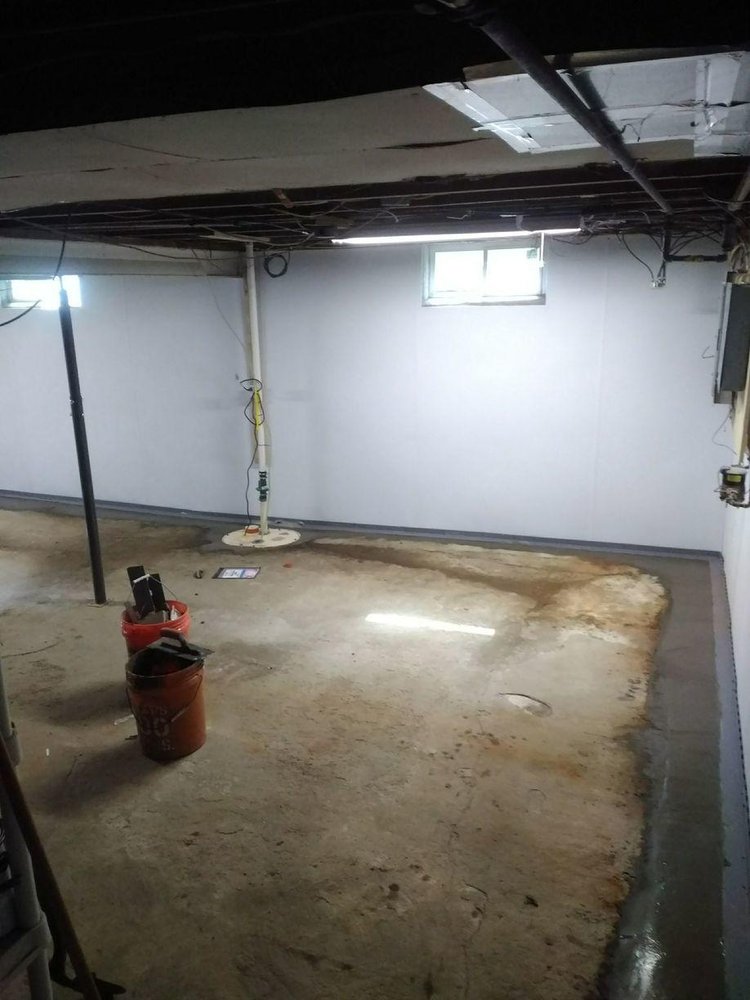
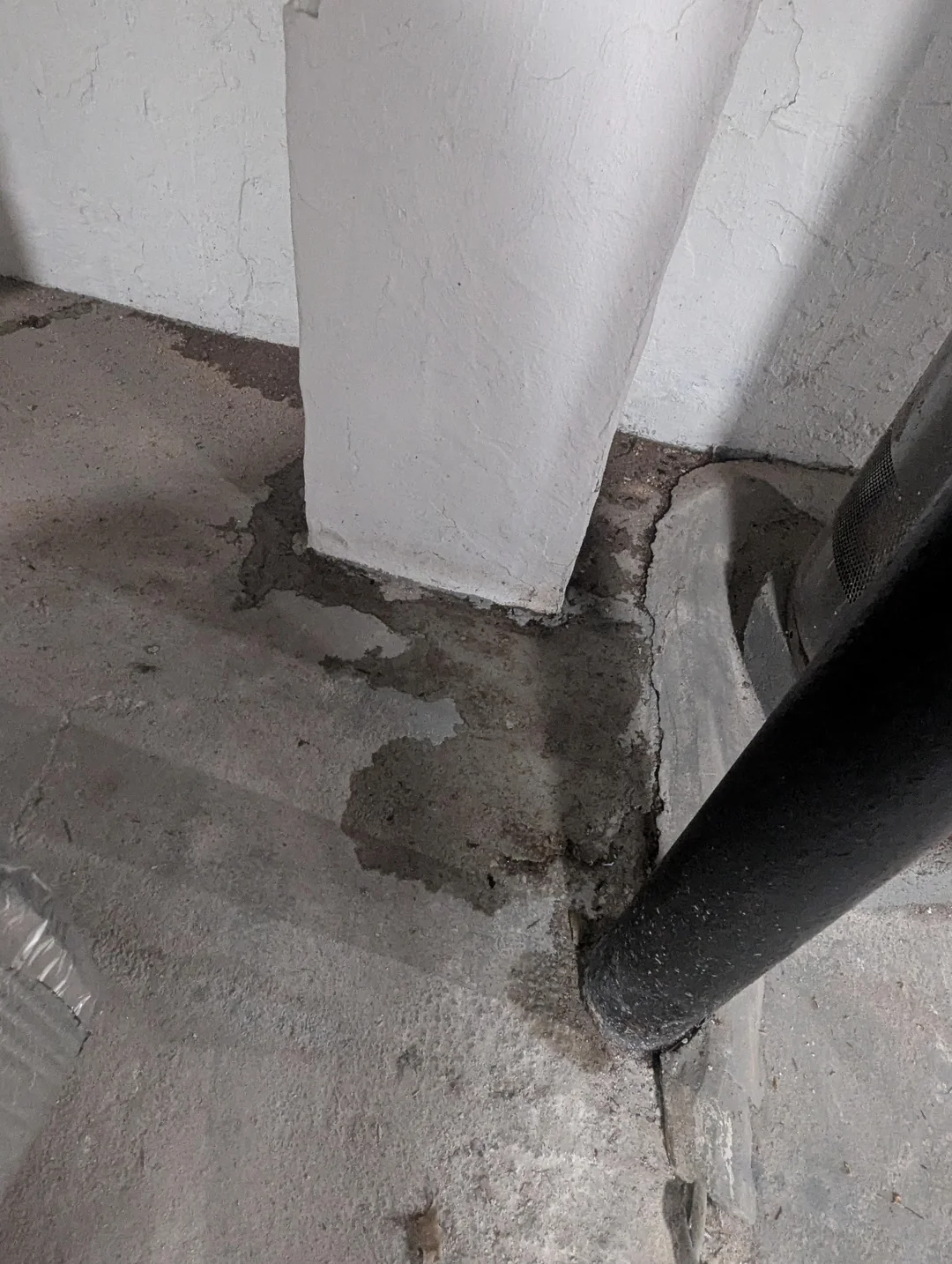
Basement crack repair seals the exact path water takes into your basement. A poured foundation wall does not leak across its whole surface. It leaks at 1 or 2 defined openings, and closing those openings stops the water without touching the rest of the wall. Water arriving along a line instead is hydrostatic pressure (opens in a new tab), a different job entirely, and the two are diagnosed differently.
Syracuse foundations crack for a reason written into the ground. The frost line here runs 42 to 48 inches (107 to 122 cm), so soil against the wall freezes and expands every winter, then releases in spring. Fifty of those cycles put more strain on concrete than most of the country ever sees, and frost heaving (opens in a new tab) widens whatever is already open.
We inject at low pressure so resin travels the full thickness of the wall rather than blowing out the face. When resin appears at the exterior, the void is gone and there is no longer a route for water, mold or basement seepage to follow.
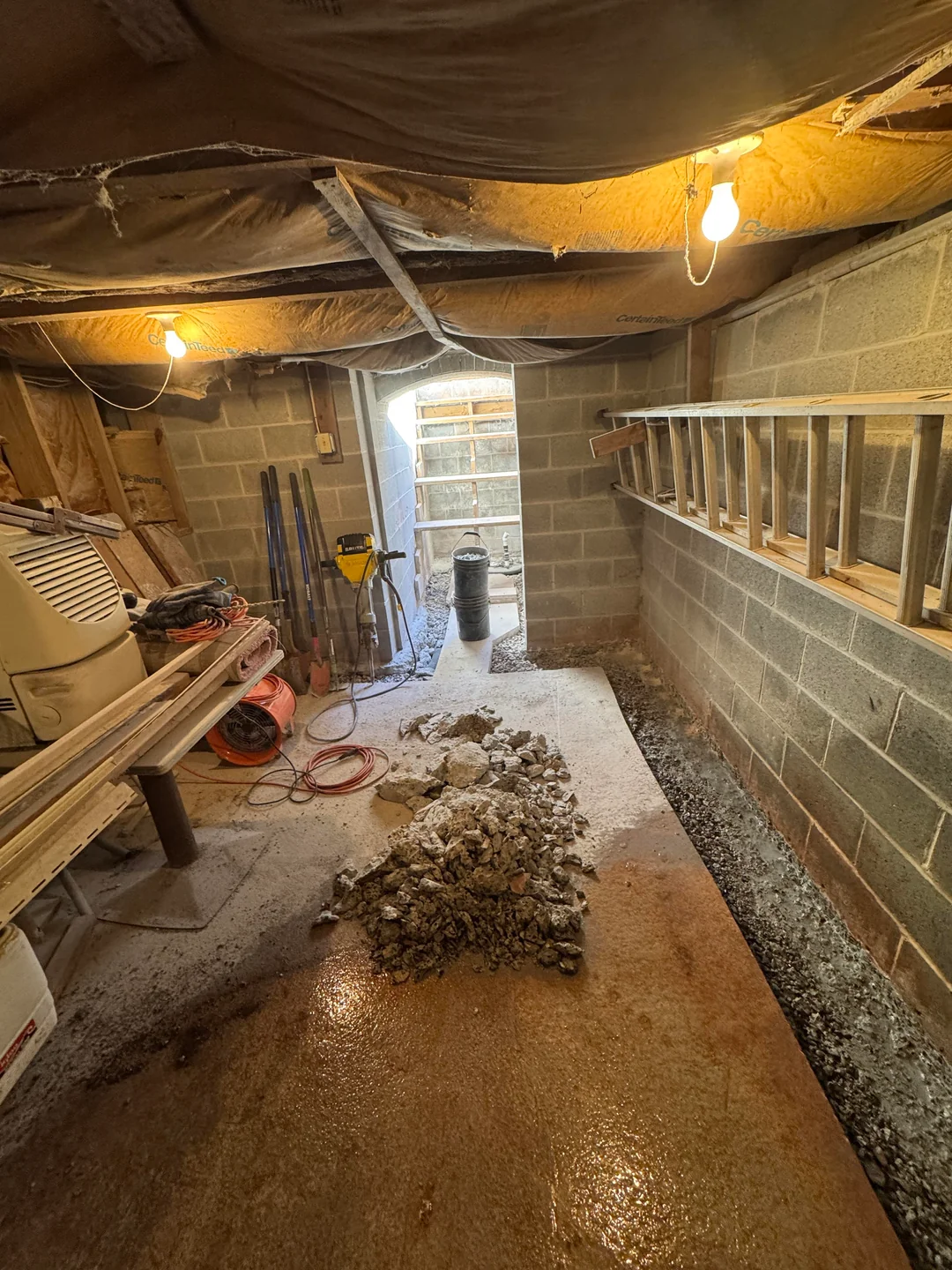
Timing matters here. Spring snowmelt raises the water table (opens in a new tab) and puts pressure behind every opening at once, which is why a crack that only wept last March can run this March. If the crawl space under the same house is damp, that is crawl space encapsulation rather than injection.