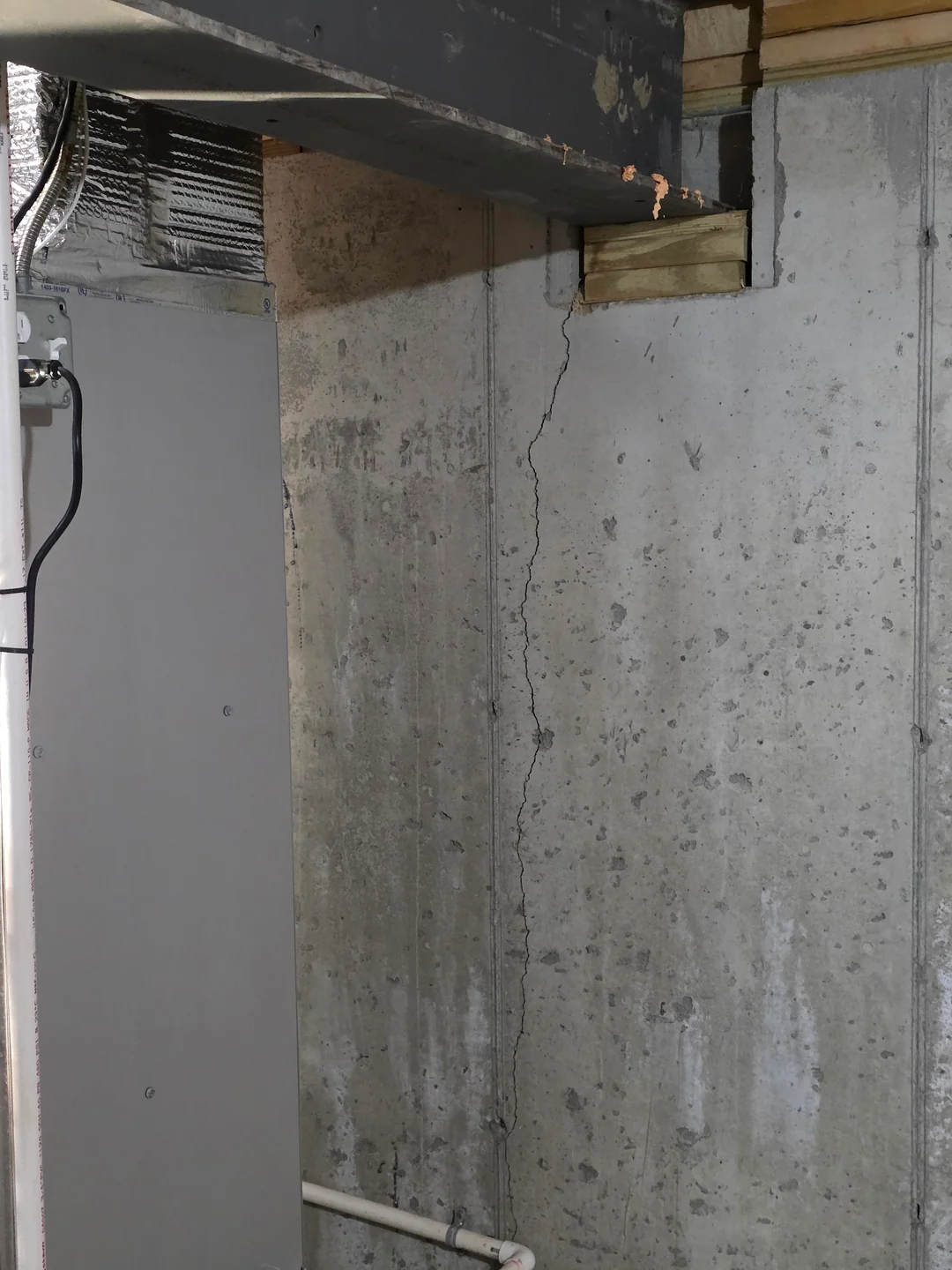
This is the question that decides whether you spend six hundred dollars or ten thousand, and it is the one most homeowners never get asked. Two companies can look at the same wet basement and quote wildly different things, usually because only one of them bothered to find out where the water enters.
Here is how we tell the difference, and how you can get most of the way there yourself.
The one question that separates them
Is water coming in at a specific point, or along a line?
- A specific point, a crack, a tie-rod hole, a pipe penetration, is a sealing problem. The wall is doing its job everywhere except that one spot, and basement crack repair closes it.
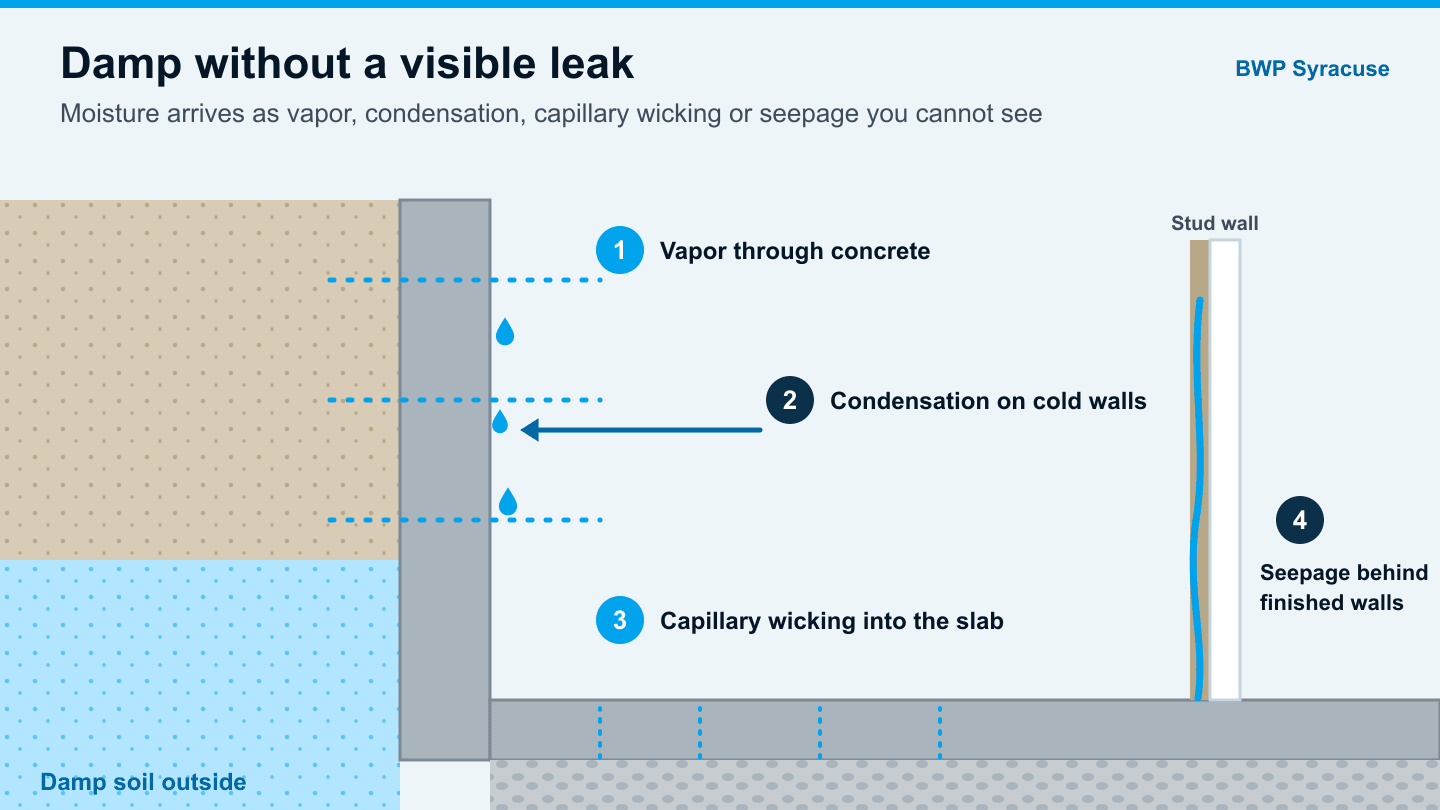
- A line, most often the cove joint where the wall meets the floor, or a wet patch that spreads across the slab, is a pressure problem. Water is being pushed up from underneath by hydrostatic pressure (opens in a new tab), and no amount of sealing will hold it back.
Almost everything follows from that distinction.
Signs it is a crack
- The wet patch always starts in the same narrow spot and runs down
- You can see the crack, and it darkens before the floor gets wet
- The rest of the perimeter stays dry, even in a heavy thaw
- It got noticeably worse after a specific winter rather than gradually
Signs it is pressure
- A dark line along the cove joint that appears after the thaw starts, the pattern explained in what water where the wall meets the floor means
- Water on the floor with no obvious trail down any wall
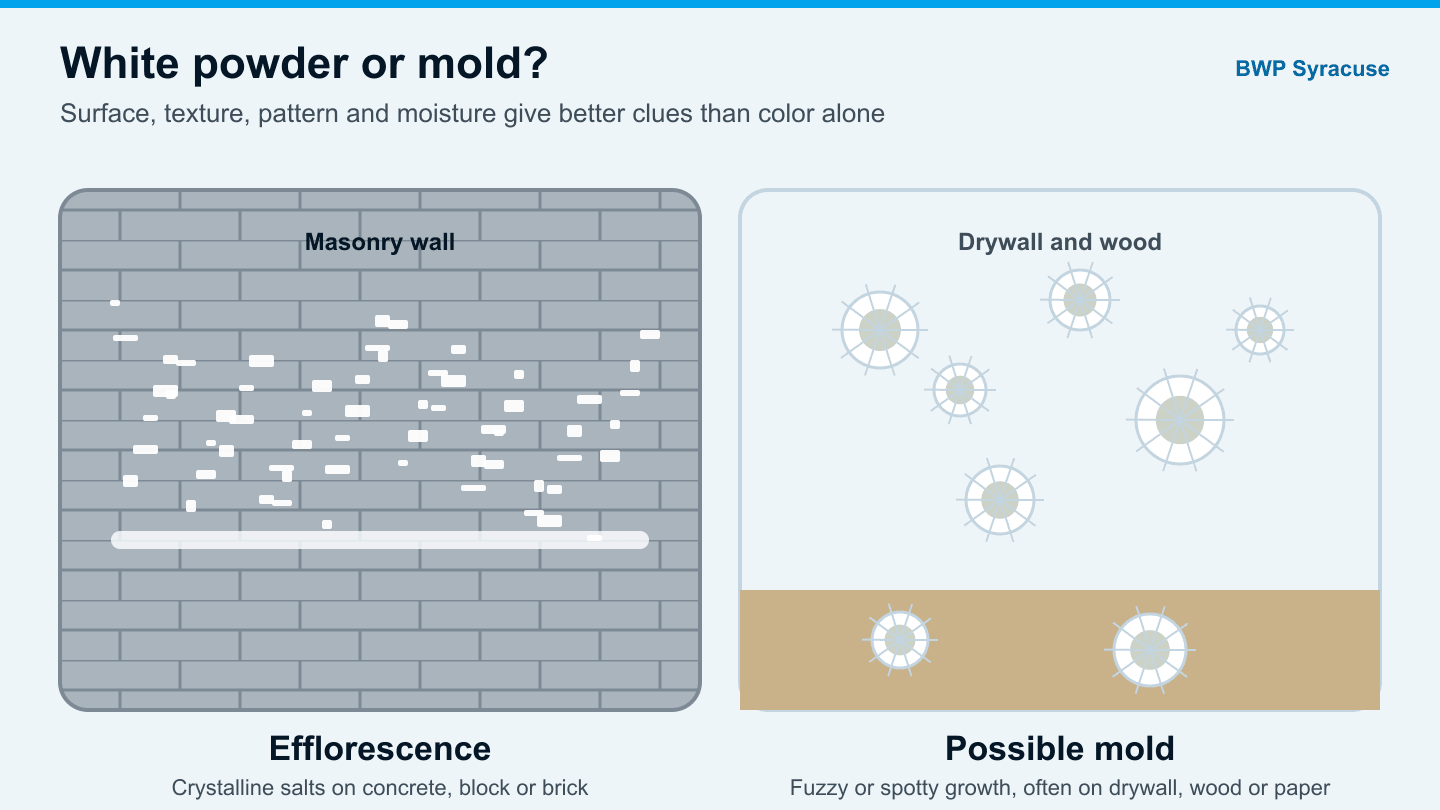
- Efflorescence spread over a wide area rather than around one line
- It happens every spring, at roughly the same time, regardless of rainfall
That last one matters in Syracuse specifically. If your basement floods on a schedule rather than after storms, you are watching the water table (opens in a new tab) rise. The USGS explanation of aquifers and groundwater (opens in a new tab) is the clearest short version of why that happens on a calendar, and it is pressure, not a crack.
What each one actually costs
| Crack repair | Full waterproofing | |
|---|---|---|
| Typical cost | $495 to $850 per crack | $68 to $92 per linear foot |
| Time on site | Half a day | 2 to 3 days |
| Disruption | Almost none | Saw-cutting, dust, containment |
| Fixes pressure? | No | Yes |
| Fixes a defined crack? | Yes | Yes, but with a sledgehammer |
| Warranty | Lifetime, no re-leak | Lifetime, transferable |
The full 2026 price breakdown covers what moves those numbers on a specific house, and it is worth reading before you compare quotes. It is also worth knowing the difference between damp proofing (opens in a new tab) and true waterproofing, because plenty of quotes describe the first and charge for the second.
Where homeowners get oversold
The most common thing we are called in to second-opinion is a full-perimeter quote for what turns out to be one or two cracks. It happens because a perimeter system is easier to sell, easier to schedule, and considerably more profitable than an afternoon with an injection rig.
We had a house in Eastwood this March quoted five figures by two firms. A forty-minute hose test put the entry at two vertical cracks. Both were injected in one afternoon with expanding polyurethane resin (opens in a new tab), and the basement has been dry through two thaws since. The whole job is written up in the Eastwood bungalow case study, numbers included.
That is not a criticism of drainage work, when the problem is pressure, drainage is the only thing that works, and a crack injection would have been money thrown away. It is a criticism of quoting before diagnosing.
Where homeowners get undersold
The opposite mistake is just as expensive. Injecting a crack in a basement that has a water table problem buys you one dry season, sometimes two. The water finds the next weak point, a different crack, the cove joint, or straight up through the slab, and you are back where you started, having spent money that did not go toward the actual fix. The wider set of options, from grading to exterior membranes, is laid out in the main waterproofing methods compared.
If a contractor offers to inject a crack without asking whether the rest of the floor gets wet, that is a flag. So is a quote that arrives before anyone has looked at the nine signs a basement shows first.
What to do before you call anyone
- Photograph the wet areas while they are wet, with a date. Dry walls tell you very little.
- Note the timing, during rain, hours after, or only during the March melt.
- Check the outside: downspout discharge, grading, and where the snow gets piled. The November checklist walks that in order.
- Run the chalk test above on any crack you can see.
Bring those four things to the inspection and you will get a much better diagnosis, from us or from anyone else. Ours is free either way, takes about forty minutes, and follows the same sequence on every house. Finding out you have a $600 problem rather than a $10,000 one is a genuinely good morning.