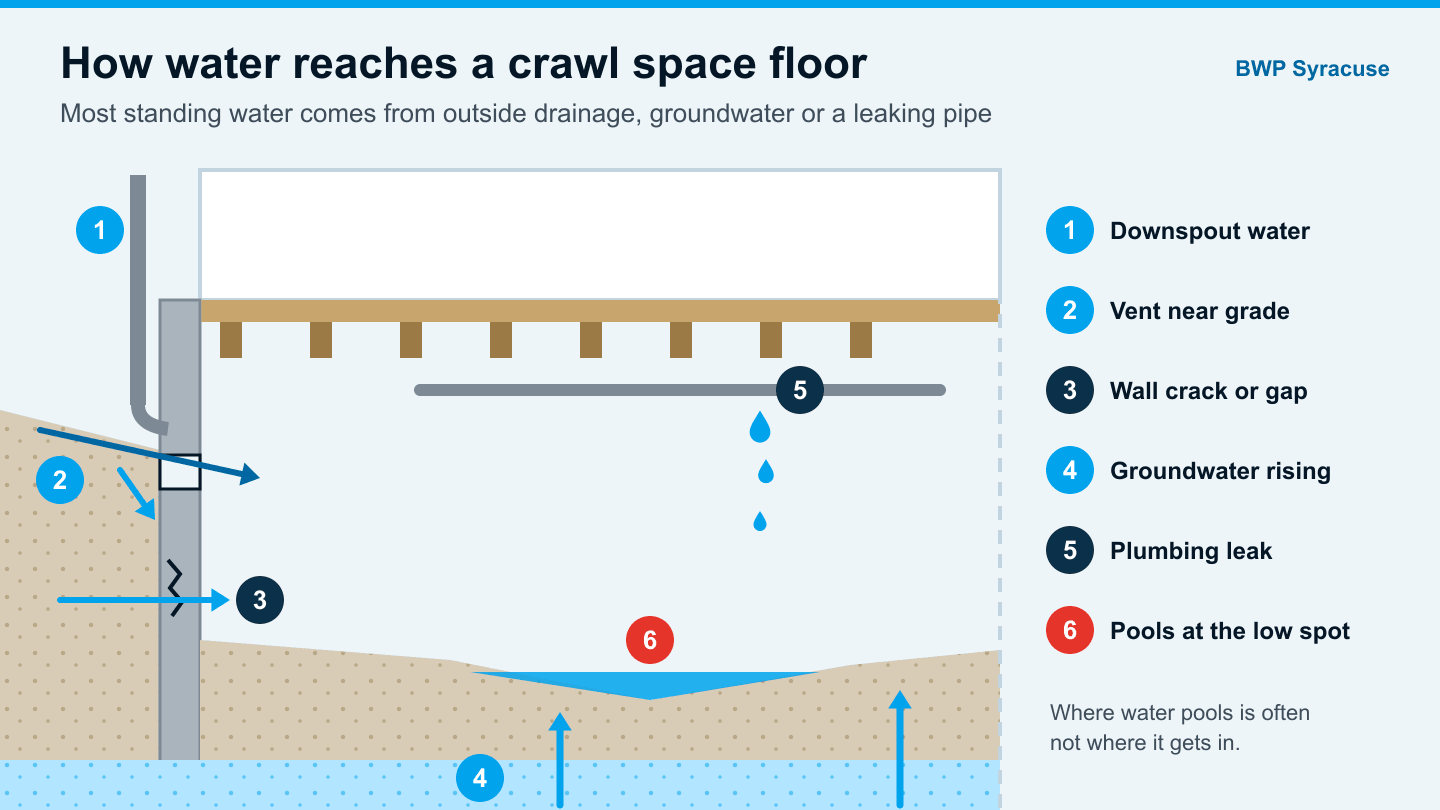
Standing water in a crawl space almost always comes from one of three places: rain and snowmelt that the outside drainage is sending toward the foundation, groundwater rising from below, or a leaking pipe. The fix depends on which one it is, so the first job is to observe the water safely and work out when it appears and where it enters.
This article deals only with liquid water: puddles, pools and wet ground that stays wet. Damp air, condensation and humidity are a separate problem with separate fixes, covered in the guide to crawl space moisture.
Why Standing Water in a Crawl Space Is a Problem
A crawl space floor is usually bare soil, gravel or a thin layer of plastic. Water that collects there has nowhere to go except down into soil that is already saturated or up into the air as it evaporates.
That has three effects. The air under the house stays near saturation, so wood framing, subfloor and insulation absorb moisture. Footings and piers sit in wet soil, which matters more in the clay soils common in the Syracuse valley because clay drains slowly and can swell when wet. And repeated wetting creates the conditions for decay and for the growth covered in mold in a crawl space.
EPA’s brief guide to mold, moisture and your home (opens in a new tab) says water-damaged areas should be dried within 24 to 48 hours to prevent mold growth. Water that sits in a crawl space for days, or returns every few weeks, keeps materials wet well beyond that.
Where the Water Comes From
Outside drainage: gutters, downspouts and grading
This is the most common source and the cheapest to fix. Rain from a roof collects in gutters and leaves through downspouts. If a gutter overflows or a downspout empties right beside the foundation, a large volume of water soaks into the soil next to the crawl space wall.
Grading means the slope of the ground around the house. Soil that slopes toward the foundation, or has settled into a low trough beside it, sends surface water to the wall instead of away from it. The water then finds a way through or under the wall and collects at the lowest point inside.
Groundwater, a high water table and snowmelt
The water table is the level below which the soil is saturated with water. It rises with heavy rain and spring snowmelt. When it rises above the crawl space floor, water seeps up from below and pools without any obvious entry point on the walls.
Syracuse winters make this pattern common. A deep snowpack melting in March, often over ground that is still partly frozen, can saturate the soil for weeks. Crawl spaces that are dry all summer can hold water from late winter into spring.
Plumbing leaks
Supply lines carry pressurized water and can leak at fittings, valves or a split section. Drain lines can leak at joints. Air conditioning equipment produces condensate, water pulled out of the air, which is supposed to drain away through a small line. A disconnected or clogged condensate line can dump water into the crawl space every day the cooling runs.
Plumbing water doesn’t care about the weather, which makes timing the best clue.
Water entering through walls, vents and access openings
Water can come through cracks in a block or poured wall, through mortar joints in older stone or block foundations, or along pipe penetrations. Foundation vents and access doors set at or near ground level can let surface water pour straight in during a heavy storm, especially if the ground or a window well outside has built up around them.
How to Check Your Crawl Space Safely
Goal: learn where and when water appears, without putting yourself at risk.
Do this from the access opening first. You can learn most of what you need with a good flashlight without crawling in.
Do not enter the crawl space if:
- Standing water is near wiring, junction boxes, a pump, a furnace or any electrical equipment.
- You smell sewage, or the water looks gray or contains waste. Treat that as contaminated water.
- The air smells of gas or fuel, or feels stale and hard to breathe.
- Framing is sagging, broken or visibly rotted, or piers look tilted or cracked.
- You’re unsure about any of the above.
In those cases, close the opening and call a professional. Never touch outlets, cords or electrical equipment while you or the equipment is wet.
Steps from the access opening:
- Shine the light across the floor. Note where water collects. The lowest spot is often far from where it enters.
- Look at the walls. A wet stripe running down from one spot points to an entry point. A water line or mineral stain at the same height around the walls points to water that rose and fell.
- Look up. Check pipes, drain lines and any air conditioning equipment for drips, wet insulation or staining directly above the water.
- Check vents and the access door. Look for mud, silt or debris inside them, a sign surface water came in that way.
- Take photos with the date. Wide shots and close shots of the edges of the water.
- Go outside. Walk the same side of the house. Look at downspout outlets, overflowing gutters, low soil against the wall and snow or ice piled near vents.
What to look for and how to read it:
| Pattern | Most likely source | What to check next |
|---|---|---|
| Water appears within hours of heavy rain, then drains | Gutters, downspouts or grading | Downspout outlets and soil slope on that side |
| Water stays for weeks in spring, rises from the floor | High water table and snowmelt | Timing against the thaw, whether all low areas fill at once |
| Water present on dry days or keeps growing | Plumbing leak | Pipes above the water, water meter test, condensate line |
| Water only in summer near the air handler | Condensate line or duct sweating | Condensate line connection and drain, ducts above |
| Wet streak on one wall feeding the pool | Wall crack or penetration | The outside of that wall and any pipe entering it |
| Silt or mud inside a vent or access door | Surface water flowing in at grade | Grade and window wells around that opening |
How to read the result: water that follows the weather points outside. Water that ignores the weather points to plumbing. Water that rises from below in spring and lingers points to groundwater.
The water meter test
If timing suggests plumbing, turn off every fixture and water-using appliance, note the meter reading and check again after an hour or two without using water. A meter that moves means water is going somewhere, and a plumber should trace it. This test catches supply leaks only. Drain leaks show up when fixtures above are used, so watch the crawl space while someone runs a sink or tub.
What to Do About Standing Water
Work from the outside in, and from the cheapest likely fix to the more involved ones.
1. Fix the surface drainage
Clean gutters, repair leaks and extend downspouts so they empty well away from the foundation. Rebuild low soil next to the house so it slopes away from the wall. Keep snow from being piled against vents and access doors. The outside checks in the spring thaw checklist apply to crawl spaces too.
These steps often reduce or stop water that only appears after storms. They do less for groundwater.
2. Repair plumbing and condensate lines
Any supply or drain leak needs a plumber. A disconnected or clogged condensate line needs to be reconnected and routed to a proper drain. Insulating supply pipes in a vented crawl space also reduces the risk of a frozen pipe that splits and floods the space during the next thaw.
3. Add interior perimeter drainage and a sump
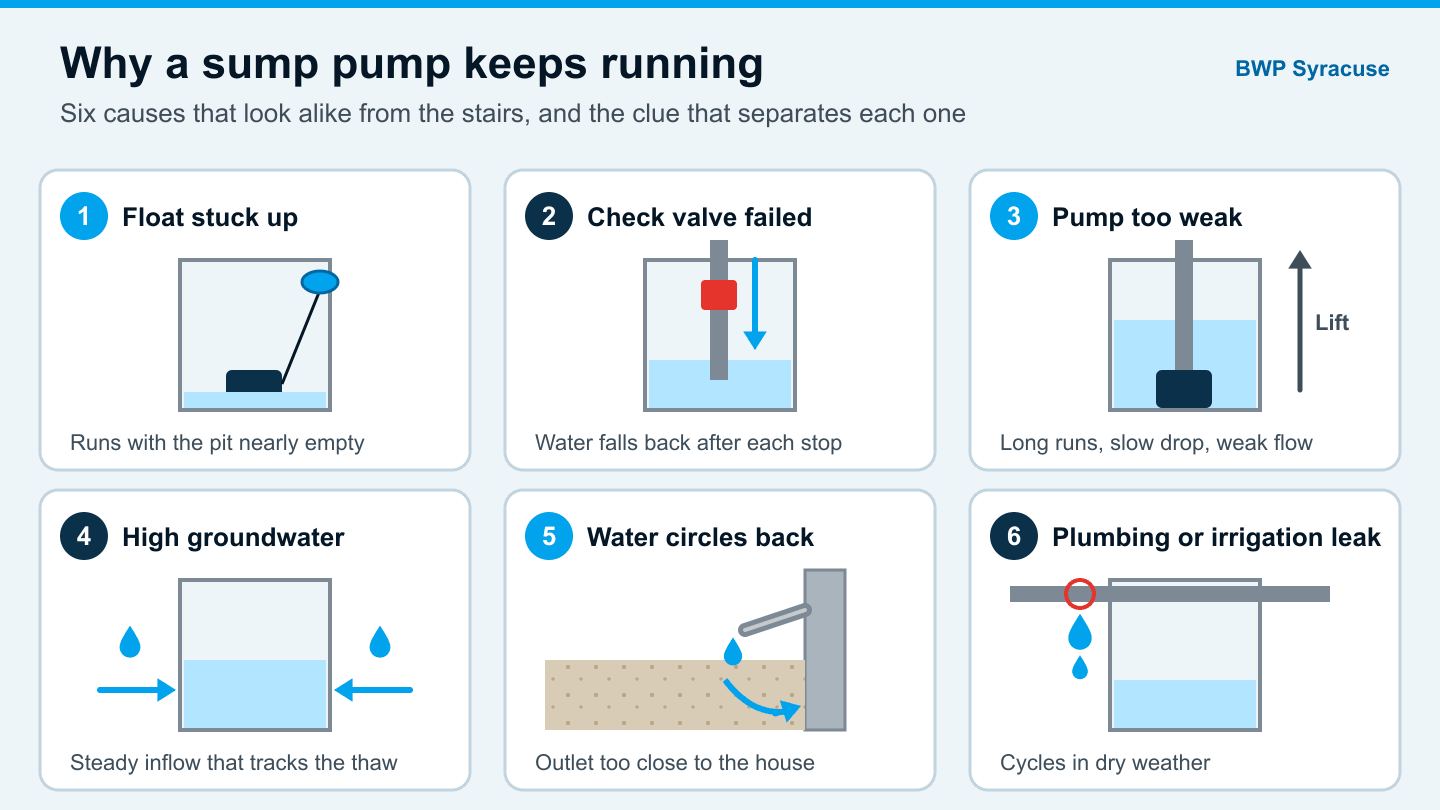
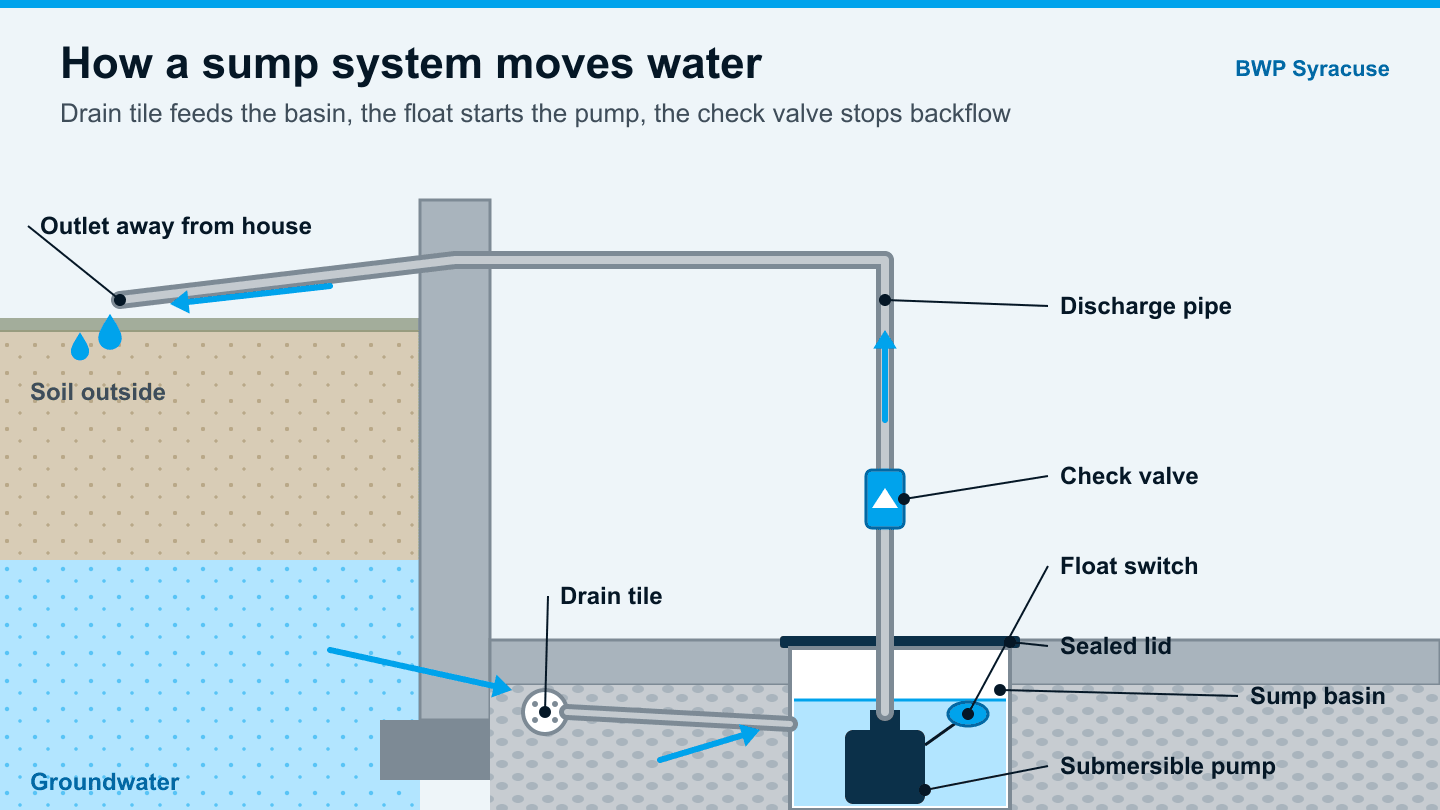
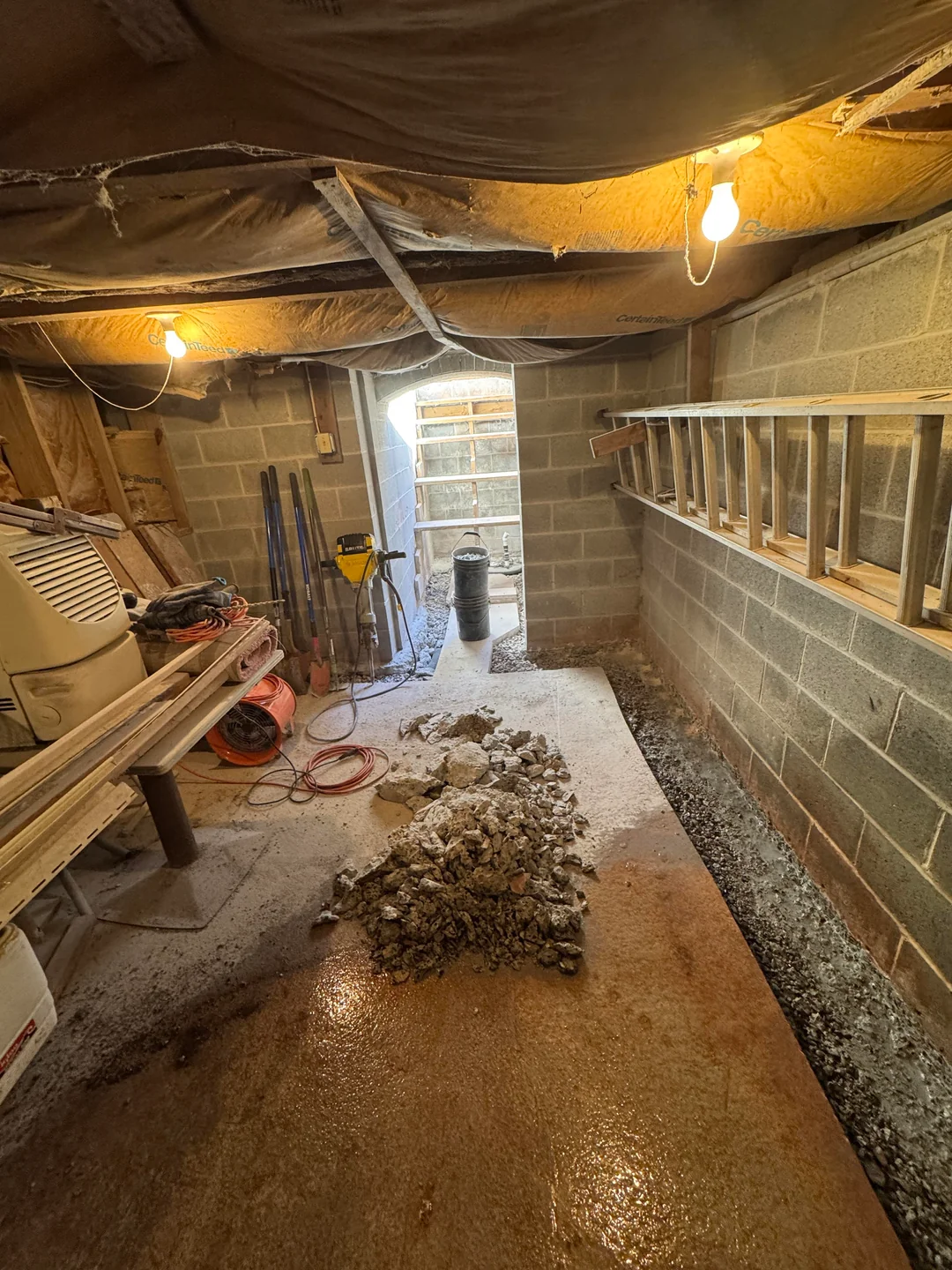
When water comes from groundwater, or from the walls despite good outside drainage, the usual answer is an interior drain. A perforated pipe is set in a trench along the inside of the foundation walls, or at the low spots, and slopes to a sump basin (a lined pit that collects the water). A sump pump lifts the water out and discharges it away from the house.
DOE’s Building America guidance on crawl space floors (opens in a new tab) recommends installing drainage pipe and a sump pump that pumps to daylight away from the house where a crawl space has a history of flooding or pooling water. A sump needs its own electrical supply, a check valve (a one-way valve that stops pumped water from flowing back) and a discharge line that won’t freeze or empty back toward the foundation. This is professional work. Details on how these systems collect water are on the interior drainage and sump systems page.
4. Then add a vapor barrier or full encapsulation
Once liquid water is managed, the ground can be covered. A vapor barrier over the soil slows evaporation into the crawl space air. Full crawl space encapsulation goes further, sealing the liner to the walls and piers, insulating and air sealing the walls and adding a dehumidifier. The liner is laid over the drainage, so water that gets in goes to the sump instead of pooling on the plastic.
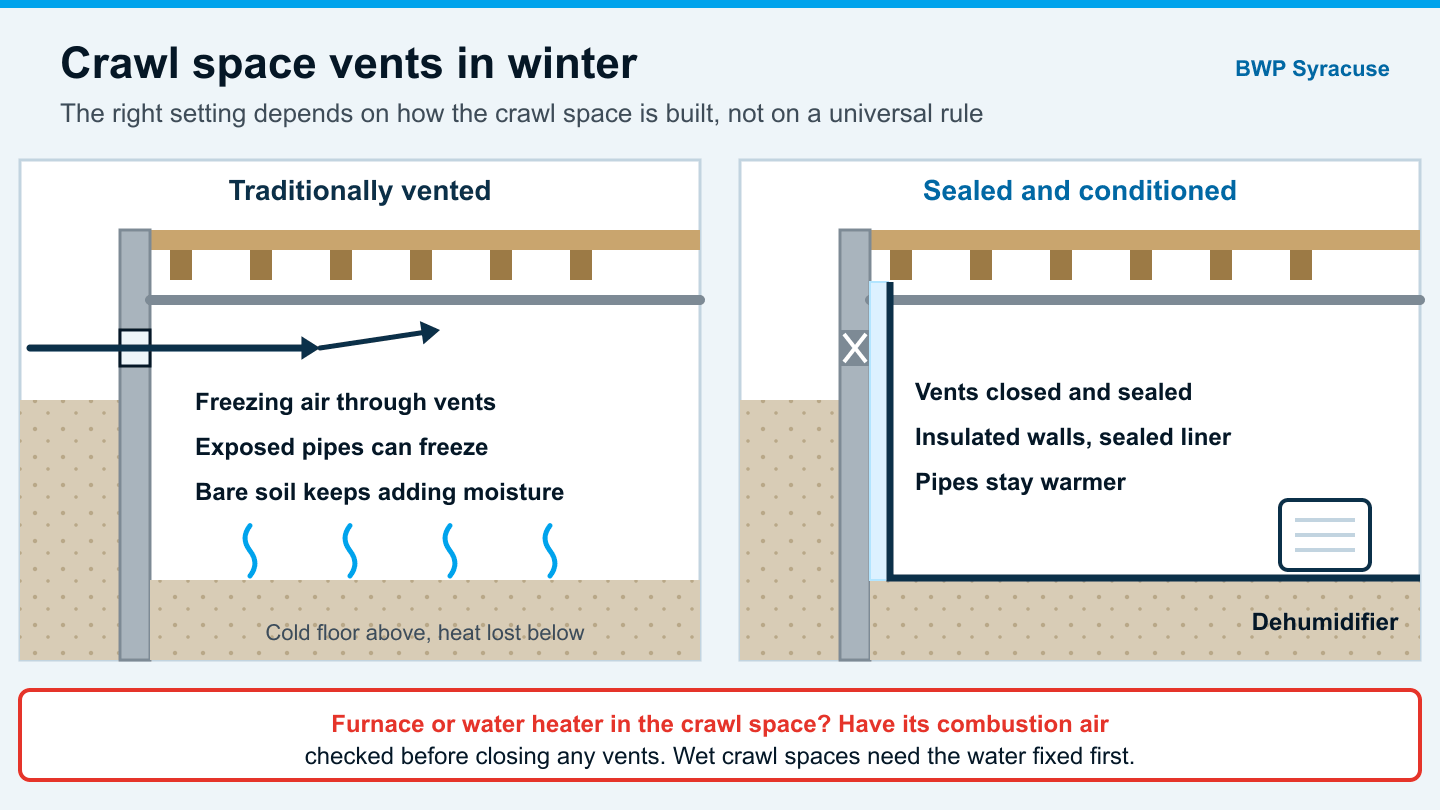
Closing the vents comes last in that sequence, and only on a sealed crawl space. Shutting vents on a crawl space with standing water traps the moisture, which is explained in whether crawl space vents should be open or closed.
5. Dry the space
After the water is removed and the source is fixed, the soil, framing and insulation still hold water. Fans and a dehumidifier sized for the space speed drying. Wet insulation that has fallen or sagged usually needs to come out, since it holds water against the wood and dries slowly.
Mistakes That Keep the Water Coming Back
- Laying plastic over a puddle. The water stays, now hidden, and the plastic can trap it against the soil and footings.
- Closing vents to stop the water. Vents are rarely the source unless they sit at grade, and closing them on a wet space raises humidity.
- Pumping out the water and stopping there. The next storm or thaw refills the space.
- Assuming it is groundwater without checking the plumbing. A water meter test takes an hour.
- Running a pump on an extension cord through the water. Use a GFCI-protected outlet, keep cords dry and out of the water, and leave anything involving wiring to an electrician.
When You Need a Professional Assessment
Call for an assessment when water returns after every heavy rain or each spring despite working gutters and good grading, when water appears with no clear source, when you see water near wiring or equipment, when the water smells of sewage, or when framing, piers or the floor above show damage. EPA’s guidance says to call in a professional when water damage was caused by sewage or other contaminated water.
A useful assessment separates the sources rather than assuming one. Bring your dated photos and notes on the weather, since they show patterns a single visit can miss. If framing has softened or piers have moved, crawl space repair may be needed before any drainage or sealing work. A free inspection can trace the water and tell you which of those steps your crawl space needs.
Standing water in a crawl space is a timing puzzle first, so write down when it shows up and the source usually narrows itself down.
Frequently Asked Questions
Is a little standing water in a crawl space normal?
No. Liquid water sitting on the ground of a crawl space means water is getting in faster than the soil can take it away. A small puddle after a rare storm is less urgent than a pool that returns every spring, but both point to a source worth finding. Ground that is damp but not pooled is a moisture issue, which the crawl space moisture guide covers.
Can I pump out the water myself?
For shallow, clean water with no electrical equipment, wiring or outlets in or near it, a homeowner can often remove it with a wet/dry vacuum or a small utility pump plugged into a GFCI-protected outlet outside the water. If the water touches wiring, comes from a sewer line, or you would have to stand in it to work, stop and call a professional. Removing the water also does nothing about why it arrived.
Will a vapor barrier stop standing water?
No. A vapor barrier slows water vapor rising from the soil, but it is not designed to hold back liquid water. Water that enters from the walls or rises from the ground collects on top of or under the plastic. The water source has to be handled first, and then a barrier or full encapsulation can do its job.
Why is there water in my crawl space when it has not rained?
Water that appears or stays during dry weather points toward plumbing first: a supply line, a drain line, a water heater or an air conditioning condensate line. A water meter test with every fixture turned off can show whether a supply line is leaking. Water that only appears in spring can also be groundwater from snowmelt, which can lag days behind the weather.
How long can standing water sit in a crawl space?
EPA guidance says water-damaged areas and items should be dried within 24 to 48 hours to prevent mold growth. Standing water that sits for days keeps wood, insulation and soil wet long past that window, which is why repeated pooling tends to show up later as staining, rot or growth on the framing.