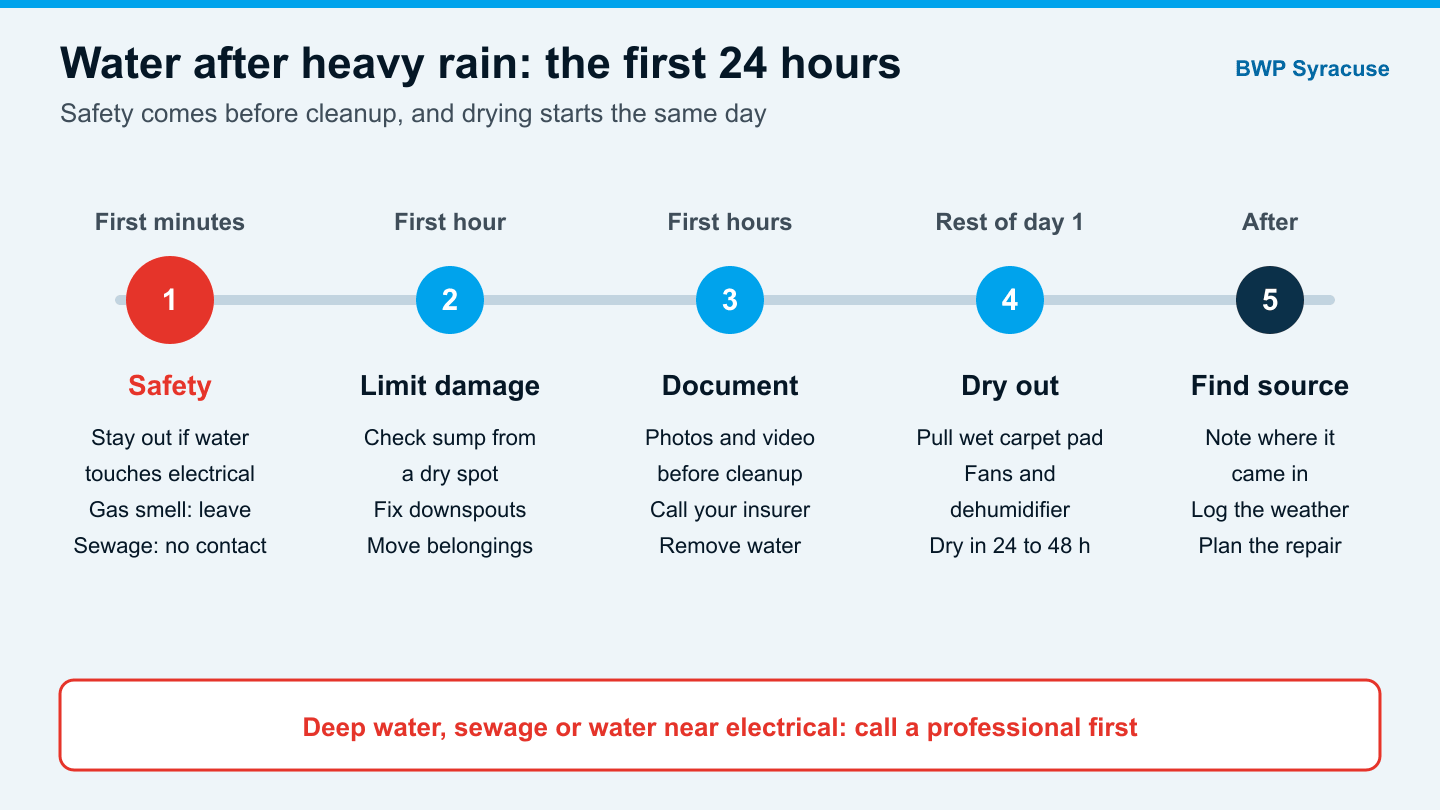
When you find water in the basement after heavy rain, deal with safety first: electricity, gas and whether the water could contain sewage. Then stop more damage, document everything for insurance, remove the water and start drying within 24 to 48 hours. How much of that you do yourself depends on how deep the water is and where it came from.
This is a response plan for the first day, not a list of causes. Once the basement is dry, the guide to why a basement gets wet will help you work out where the water came in.
First, Size Up the Water
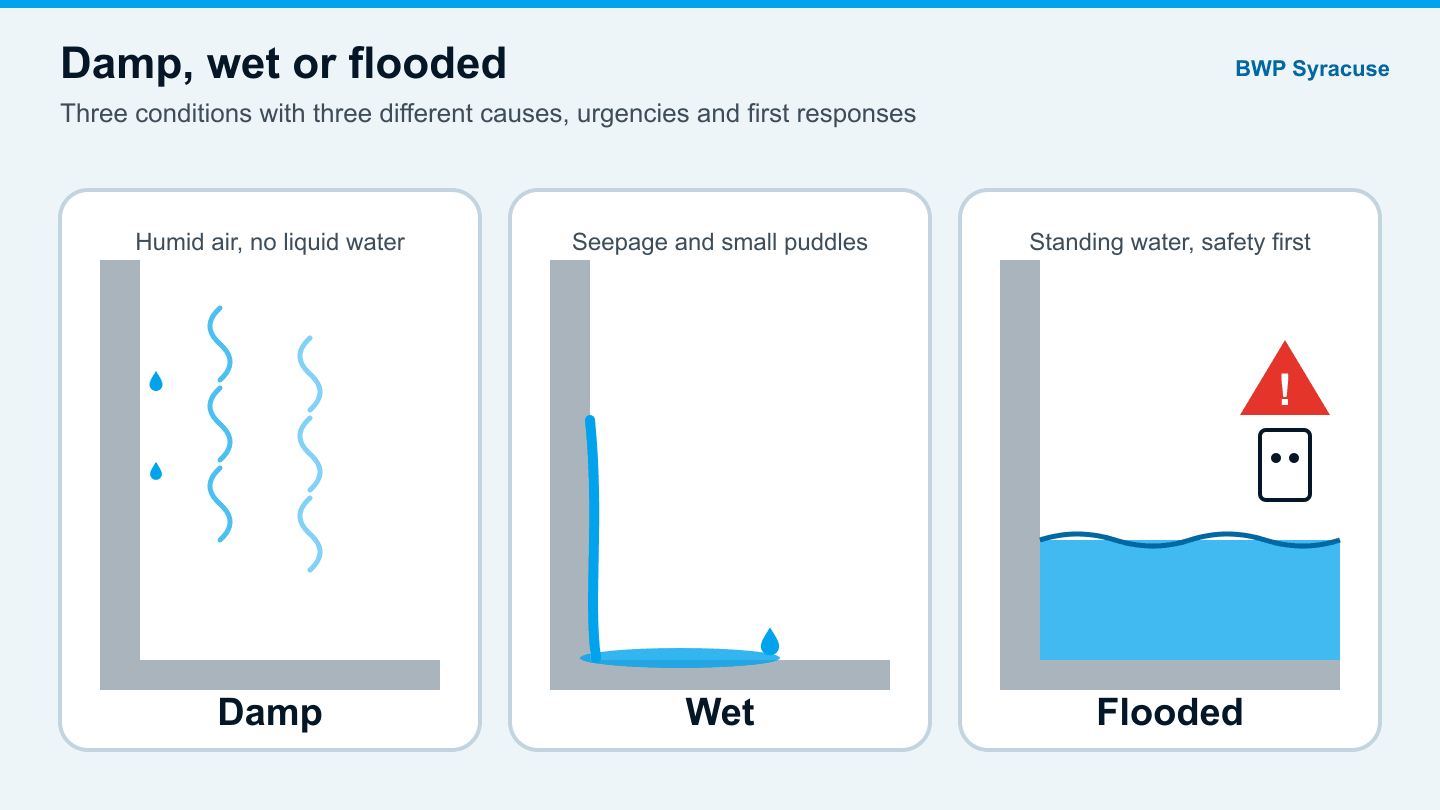
Look from the stairs before you step down. The depth and the type of water decide what is safe.
| What you see | Who should handle it |
|---|---|
| Damp floor or a few small puddles, no electrical equipment touched | You, with the steps below |
| Water across much of the floor, under about an inch, nothing electrical in it | You, carefully, possibly with a restoration company for drying |
| Deeper water, or water touching outlets, cords, the furnace, water heater or panel | Stay out; utility or electrician first |
| Water that came up a floor drain, smells of sewage or looks dark | Treat as sewage; a restoration or cleanup professional |
| New cracks, a wall bulging inward, a sagging floor above | Stay out; get a structural evaluation |
The lines between these are not exact. If you are unsure, treat it as the more serious case.
In the First Few Minutes: Safety Before Anything Else
Water and electricity are the main danger. Do not walk into water if it could be touching outlets, extension cords, power strips, appliances or the electrical panel. Do not touch the sump pump, its cord or any plug while standing in water or on a wet floor.
University of Nebraska-Lincoln Extension puts the rule plainly: never go into a flooded basement unless you know the electricity is off. If the electrical panel is somewhere you can reach while staying completely dry, you can switch off the breakers that serve the basement. If reaching the panel means crossing water, do not do it. Call your electric utility or an electrician and wait.
If you smell gas, leave the house and call the gas utility or 911 from outside. Water can put out a pilot light or damage a gas appliance.
Then decide what kind of water you are dealing with. Restoration companies commonly sort it into three rough groups:
- Clean water: from a broken supply line or a source you can identify as clean.
- Gray water: water with some contamination, such as an overflowing washer or water that seeped through soil and picked up dirt along the way.
- Black water: sewage, water that came up a floor drain from a backed-up sewer, or floodwater that ran across the ground outside. This needs professional cleanup.
Rainwater in a basement usually falls in the gray group at best. EPA’s guide to mold and moisture in your home (opens in a new tab) says that when damage is caused by sewage or other contaminated water, you should call a professional with experience cleaning buildings damaged by contaminated water.
In the First Hour: Limit Further Damage
Once it is safe to be in the basement, the next job is to keep the water from spreading or getting worse.
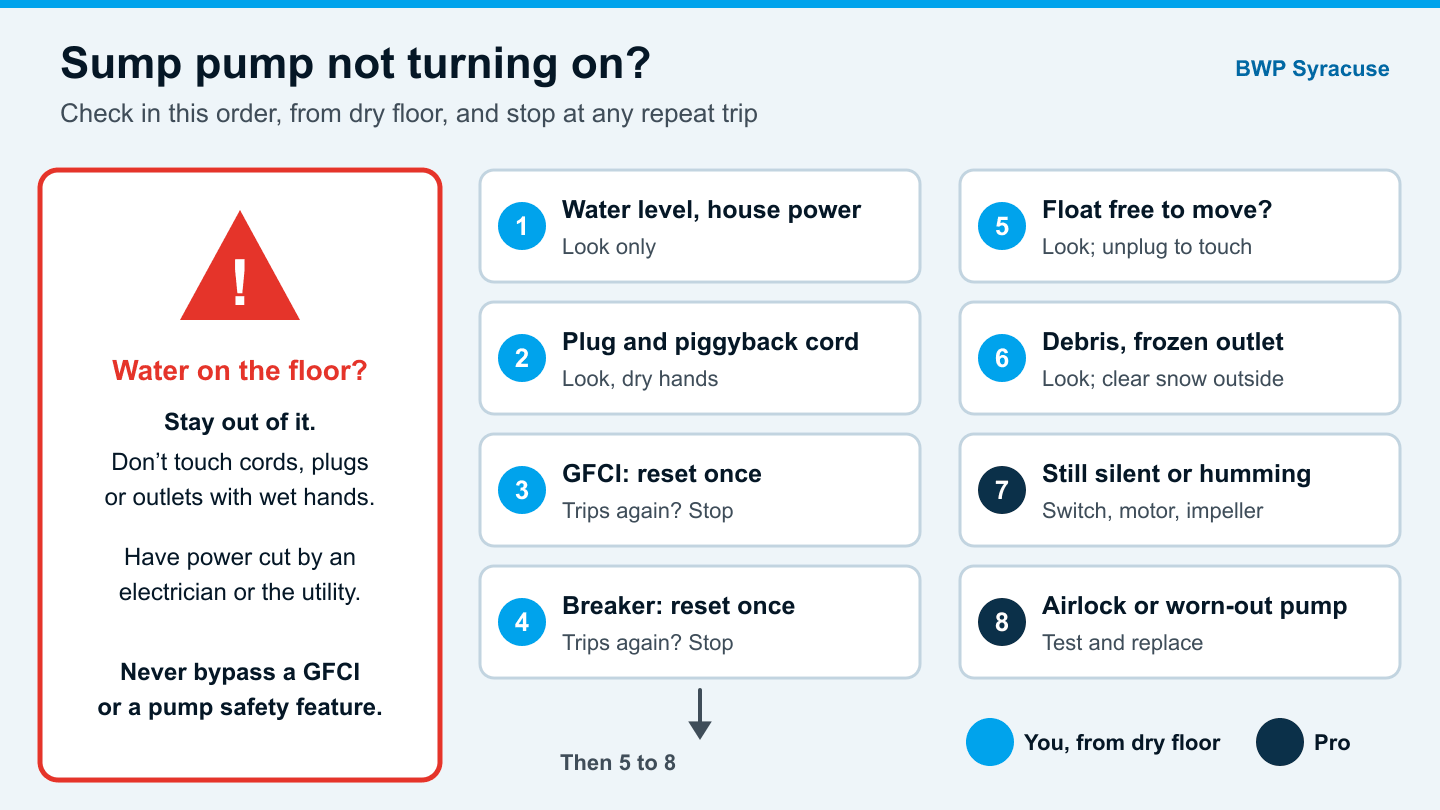
- Check the sump pump, from a dry spot. Listen for it and look at the pit. If the pit is full and the pump is silent, do not reach into the pit or unplug anything while standing in water. A pump that will not run is a separate problem covered in why a sump pump stops turning on.
- Look outside, if the storm has eased. Check for an overflowing gutter, a downspout that came loose or water pooling against the house. Reconnecting a downspout or clearing a clogged gutter from the ground can cut the inflow. Do not go out in lightning, and do not climb a ladder in rain.
- Move what you can. Carry boxes, rugs, electronics and furniture to a dry area. Put furniture that cannot be moved on blocks or foil to keep stains from wicking into the floor.
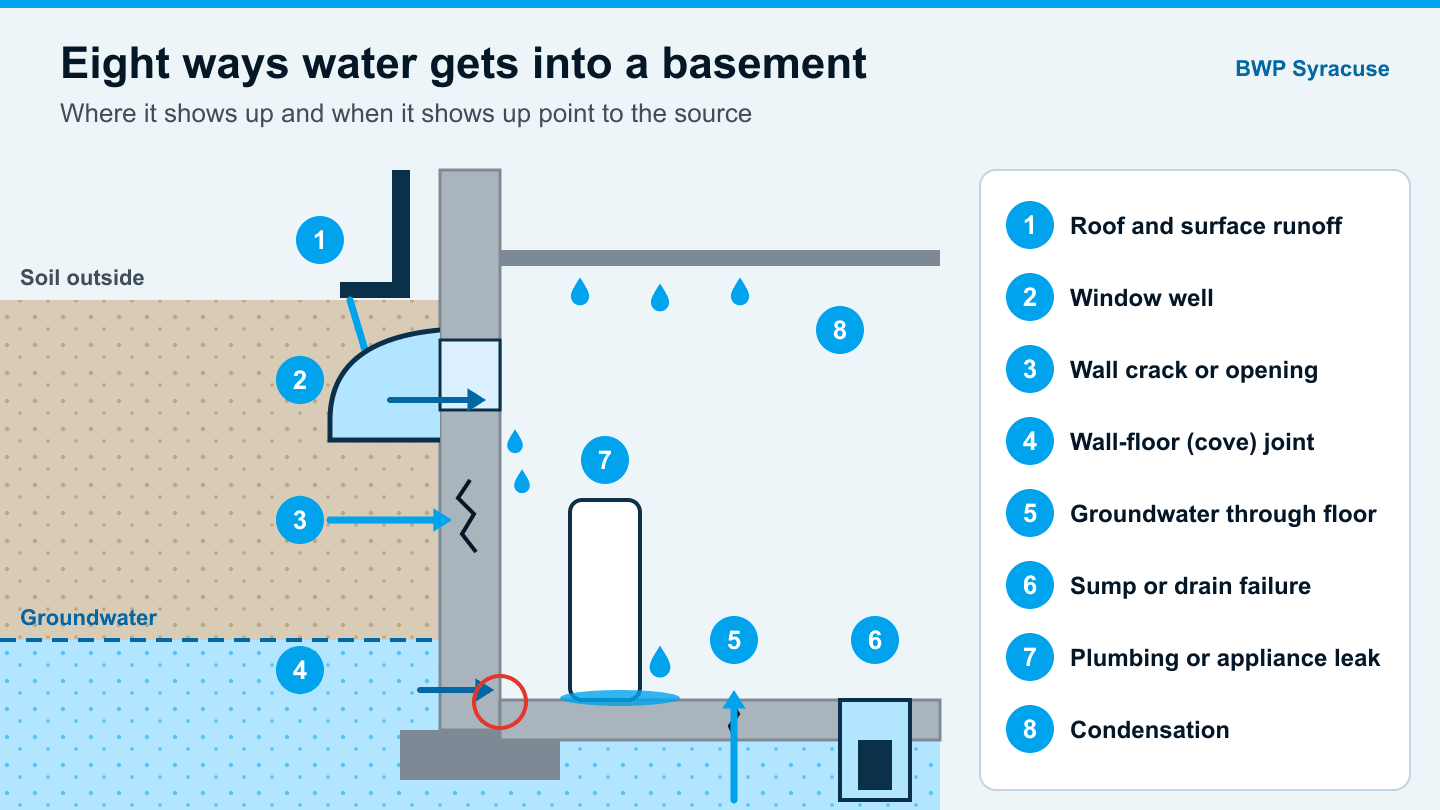
- Note where the water is coming in. A window, a crack, the wall-floor joint, the floor drain or the middle of the slab. Take a photo of the entry point while it is still active. That one picture will help the diagnosis later more than anything else you do today.
Before Cleanup: Document Everything
Insurance claims depend on evidence, and the most useful evidence disappears once you start cleaning.
- Photograph and video every wall and the whole floor, including wide shots and close-ups.
- Show the water line on walls, boxes and appliances, and hold a tape measure in one shot to record depth.
- Photograph damaged items before you move them to the curb, including model and serial labels on appliances.
- Keep a written log: when you found the water, the weather and every call you make.
- Keep receipts for fans, dehumidifiers, pumps and hotel stays.
Do not throw out damaged items until you have documented them, and ask your insurer whether they want to see anything before it goes. Coverage for basement water varies widely between policies, so read yours or call your agent rather than assuming.
In the First Few Hours: Remove the Water
How you remove water depends on depth.
Shallow water. Mops, squeegees and a wet/dry shop vacuum work for puddles and thin water on the floor. Plug the shop vacuum only into a dry, GFCI-protected outlet above the water level. A GFCI outlet has test and reset buttons and cuts power when it senses a fault.
Water across the whole floor. An electric submersible utility pump discharging outside is faster. Run its cord to a safe, dry outlet and route the hose well away from the foundation so the water does not come straight back in.
Deep water. If water is more than a few inches deep and the ground outside is soaked, pumping it all out at once can be risky. University of Nebraska-Lincoln Extension’s guidance on pumping a flooded basement (opens in a new tab) recommends lowering the water 2 to 3 feet, marking the level, and waiting overnight to see if it rises again, because outside water pressure can crack or push in walls and floors if the inside water drops too fast. The same source warns that gasoline-powered pumps and generators produce carbon monoxide, so they must never run inside the house or near windows.
For the Rest of Day 1: Start Drying
EPA’s mold and moisture guidance (opens in a new tab) says to dry water-damaged areas and items within 24 to 48 hours to prevent mold growth. That clock starts when the water arrived, not when you found it, so speed matters.
- Pull out wet porous materials. Wet carpet pad, cardboard, paper and fabric hold water and are usually not worth saving. Wet carpet may sometimes be saved by a professional, but the pad underneath rarely is.
- Open up wet walls. Drywall and insulation that wicked water up from the floor stay wet inside. Cutting the wet section out above the water line lets the framing dry.
- Move air and remove moisture. Run fans across wet surfaces and a dehumidifier with the basement doors and windows closed. On a cool, dry day, opening windows can help; on a humid day it adds moisture.
- Wear protection. Boots, gloves and eye protection at minimum. EPA’s guidance recommends an N-95 respirator when cleaning up mold.
If the area is large, the water was contaminated or things are still wet after the first day, a water restoration company has the drying equipment and moisture meters to finish the job.
When Heavy Rain Lands on Snow or Frozen Ground
In Syracuse, some of the worst basement water events come from rain falling on snow during a thaw. The ground under the snow may still be frozen, so neither the rain nor the meltwater can soak in. It runs across the surface toward the lowest point it can find, which is often a window well or the soil right against the foundation.
That changes the first-day plan in two ways. Clearing snow away from window wells and from the foundation on the wet side of the house can reduce the inflow while the thaw continues. And a sump pump that runs often in a thaw needs a clear discharge line; a frozen discharge line can stop the pump from moving water out even when the motor is running. Check where the line ends outside, from the ground, once it is safe.
Who to Call, and When
- Electric utility or electrician: water touching outlets, cords, appliances or the panel, or any doubt about whether the power is safe. Do not turn power back on until wet equipment has been checked.
- Gas utility or 911: any gas smell.
- Plumber: water coming up through the floor drain, a sewage smell or a burst pipe.
- Restoration or cleanup company: sewage, large areas, deep water, or drying that is not keeping up.
- Structural engineer: walls that cracked, bulged or moved, covered further in when a bowing basement wall needs attention.
- Drainage contractor: after the emergency, if the water came through walls, the floor or the wall-floor joint and is likely to return.
First 24 Hours Checklist
- Check from the stairs: depth, electrical equipment, sewage signs
- Power off from a dry spot only, or call the utility or an electrician
- Leave and call if you smell gas
- Boots and gloves on; keep kids and pets out
- Check the sump pump from a dry spot
- Clear gutters and reconnect downspouts from the ground, if safe
- Move belongings to a dry area
- Photo and video everything, including the entry point
- Call your insurer before discarding damaged items
- Remove water, pumping deep water in stages
- Pull wet carpet pad and cardboard; cut out wet drywall
- Fans and dehumidifier running; aim to be dry within 24 to 48 hours
- Call a professional for sewage, deep water, structural damage or slow drying
After the Water Is Gone
The basement will dry out, and the next heavy rain will test whatever let the water in. Write down where the water entered, how long after the rain it appeared and how deep it got while the details are fresh. Those notes separate a single overflowing gutter from a groundwater problem, and the difference between a damp, wet and flooded basement helps put this event in context. If you want help reading the pattern, BWP Syracuse offers a free inspection once the emergency is over.
The photo of the water coming in, taken before the cleanup starts, is the most useful thing you will have when it is time to decide on a repair.
Frequently Asked Questions
Is rainwater in the basement safe to touch?
Treat it as contaminated until you know where it came from. Water that seeped through a wall or floor has passed through soil, and water that came up a floor drain may contain sewage. Wear rubber boots and gloves, keep children and pets out, and wash your hands after any contact.
How fast does a wet basement need to be dried?
EPA guidance says to dry water-damaged areas and items within 24 to 48 hours to prevent mold growth. That is why the first day matters: remove standing water, pull out wet carpet and cardboard, and get air moving and a dehumidifier running as soon as the area is safe.
Can I use a shop vacuum on basement water?
For shallow water, a wet/dry shop vacuum is a reasonable tool, but only if it plugs into a dry, GFCI-protected outlet above the water and you are not standing in water near any live electrical equipment. Never use a household vacuum. For more than an inch or two across a large floor, a submersible pump or a restoration company is faster and safer.
Should I pump out a deeply flooded basement right away?
Not all at once if the ground outside is still saturated. University of Nebraska-Lincoln Extension advises lowering deep water in stages of 2 to 3 feet and checking overnight whether it rises again, because draining faster than the groundwater outside drops can let outside pressure damage walls and floors.
Does homeowners insurance cover water in the basement after rain?
It depends on the policy and the cause, so call your insurer or agent before making assumptions. Many standard policies treat seepage, sewer backup and outside flooding differently, and some need separate endorsements or flood insurance. Either way, photograph everything before you clean up or throw anything away.