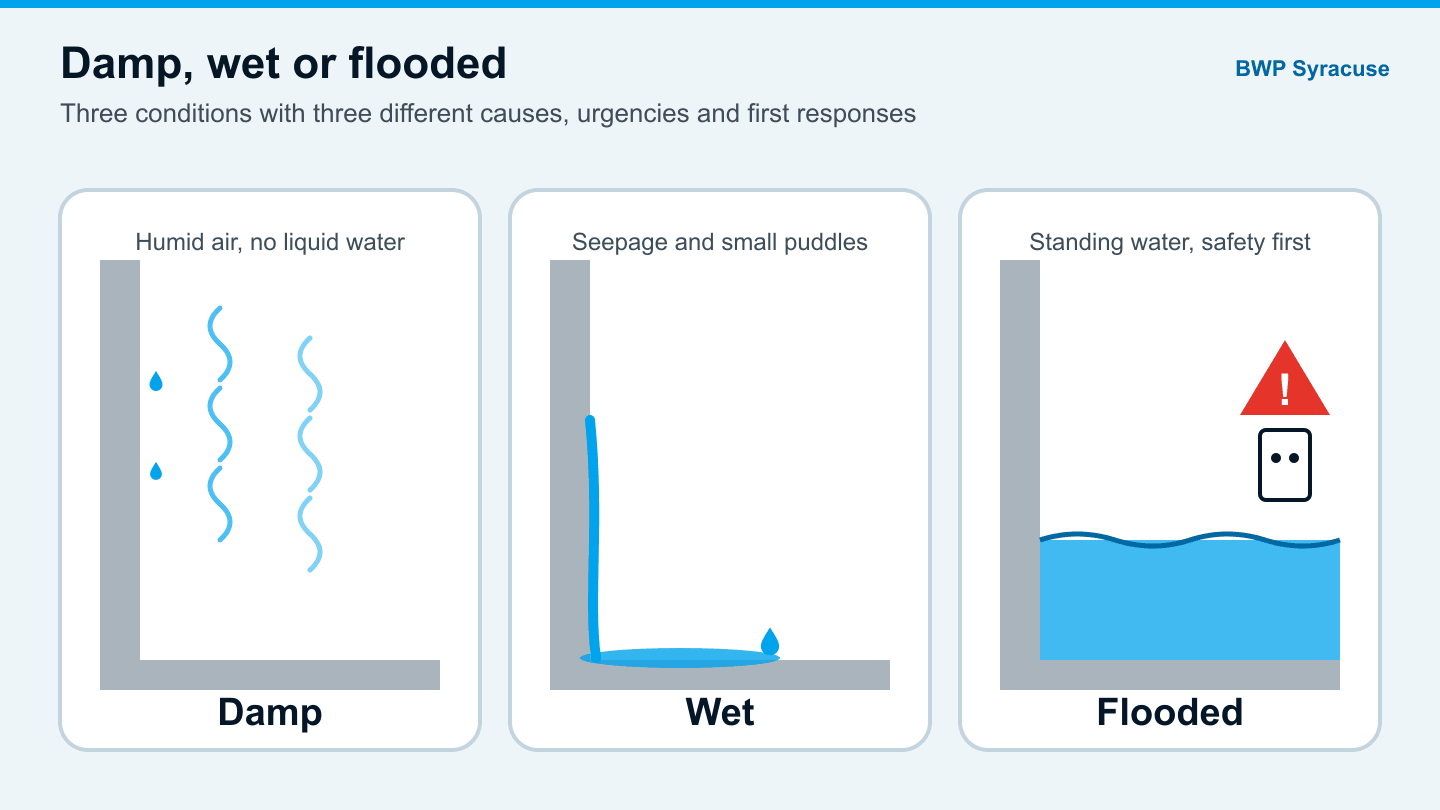
A damp basement has too much moisture in the air or in porous materials, but no meaningful liquid water collecting on the floor. A wet basement has visible seepage, soaked materials or puddles that come back, and a flooded basement has standing water across the floor or water actively pouring in, which makes it a safety problem before it is a repair problem.
Those three words get used interchangeably, and that causes real mistakes. Somebody with a damp basement vs wet basement question buys a dehumidifier when the water is coming through the cove joint, or treats an inch of water around the furnace as a humidity issue. The label matters because each condition has different causes, a different level of urgency and a different first response.
Damp Basement vs Wet Basement: The Short Version
| Condition | What you see | Common causes | Urgency | First response |
|---|---|---|---|---|
| Damp | Musty smell, clammy air, condensation on pipes or walls, humidity above 60%, no puddles | Humid outdoor air, condensation on cool surfaces, vapor through concrete, damp stored materials | Low to moderate. Address it over days to weeks | Measure humidity for several days, find what stays damp, dry or remove wet materials |
| Wet, groundwater | Dark line at the cove joint, seepage down a crack, puddles after rain or snowmelt | Hydrostatic pressure, surface water near the foundation, open cracks | Moderate. It will recur until the entry point is found | Photograph it while wet, note the timing, move belongings off the floor |
| Wet, plumbing | Water near a water heater, washer, sink or supply line, often unrelated to weather | Leaking supply lines, fittings, drains or appliances | Moderate to high. A pressurized leak keeps running | Close the fixture valve or the main water shut-off, then call a plumber |
| Flooded, clean water | Standing water across the floor, rising water, sump pump not keeping up | Failed sump pump, power outage, burst pipe, heavy snowmelt | High. Safety first, then fast drying | Stay out if electricity may be on, cut power from a dry location or call the utility |
| Flooded, sewage or floodwater | Water from a floor drain, sewage odor, discolored or dirty water | Sewer backup, outdoor floodwater entering the house | Emergency. Health and electrical hazards | Stay out of the water, avoid contact, call a plumber and a cleanup professional |
The rest of this article explains each row, how to tell them apart and who to call. Treat the table as a starting point rather than a verdict, since one basement can move between categories in a single season.
What a Damp Basement Looks Like
A damp basement has moisture you can feel or measure but cannot mop up. The air feels heavy, cardboard boxes go soft at the bottom, a musty smell hangs around, and cold water pipes drip in July even though nothing is leaking. Walls may feel cool and slightly clammy without ever showing running water.
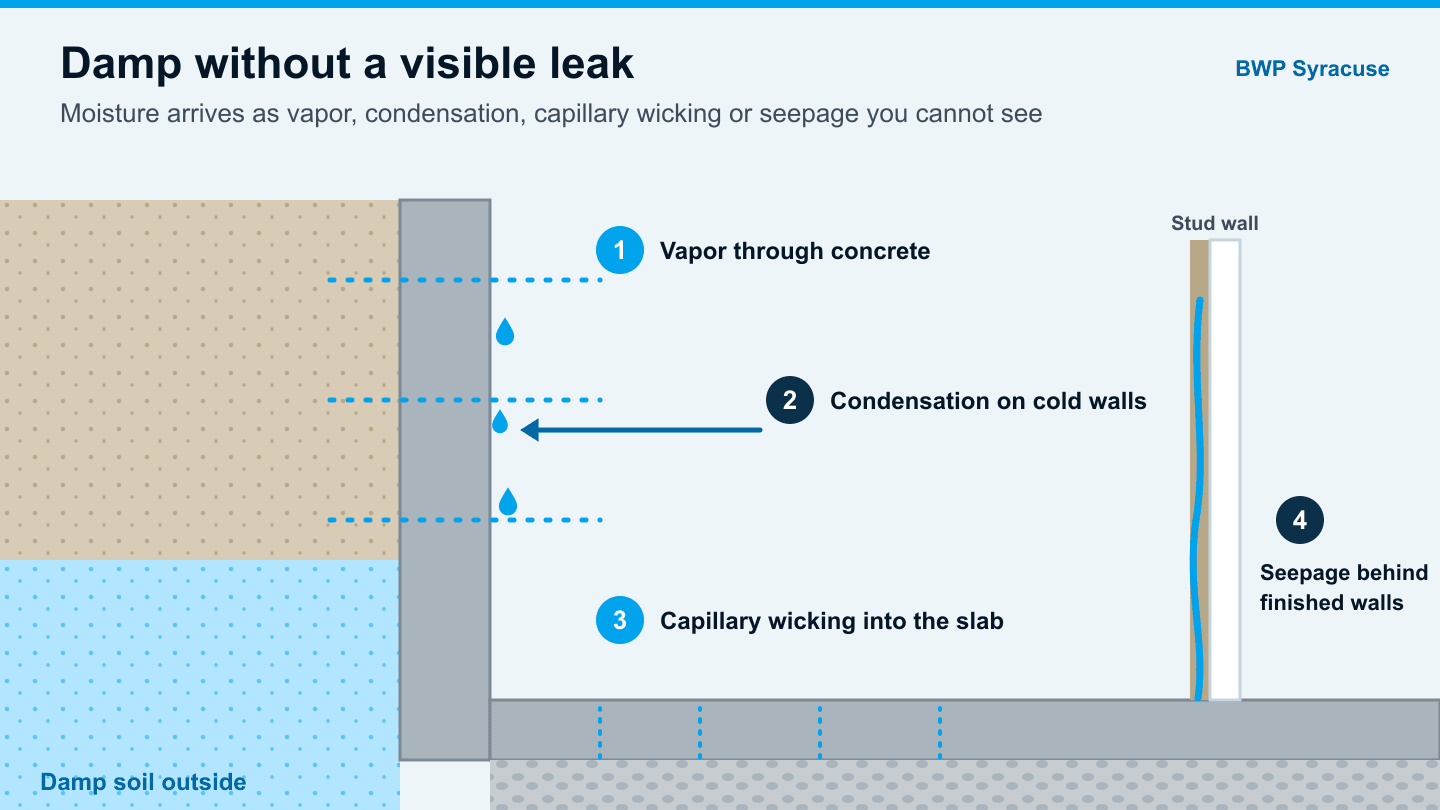
The moisture usually arrives in one of four ways:
- Humid outdoor air. Warm summer air carries a lot of water vapor. When that air reaches a cool basement, its relative humidity climbs.
- Condensation. Water vapor turns to liquid on surfaces cooler than the air, which is why cold water lines, uninsulated walls and the floor itself can sweat.
- Vapor and capillary moisture through concrete. Concrete is porous. Moisture in the soil can move through a slab or wall without ever appearing as a drip.
- Damp materials. Carpet, padding, cardboard and wood hold moisture and release it slowly, so they keep a basement damp after the original source has stopped.
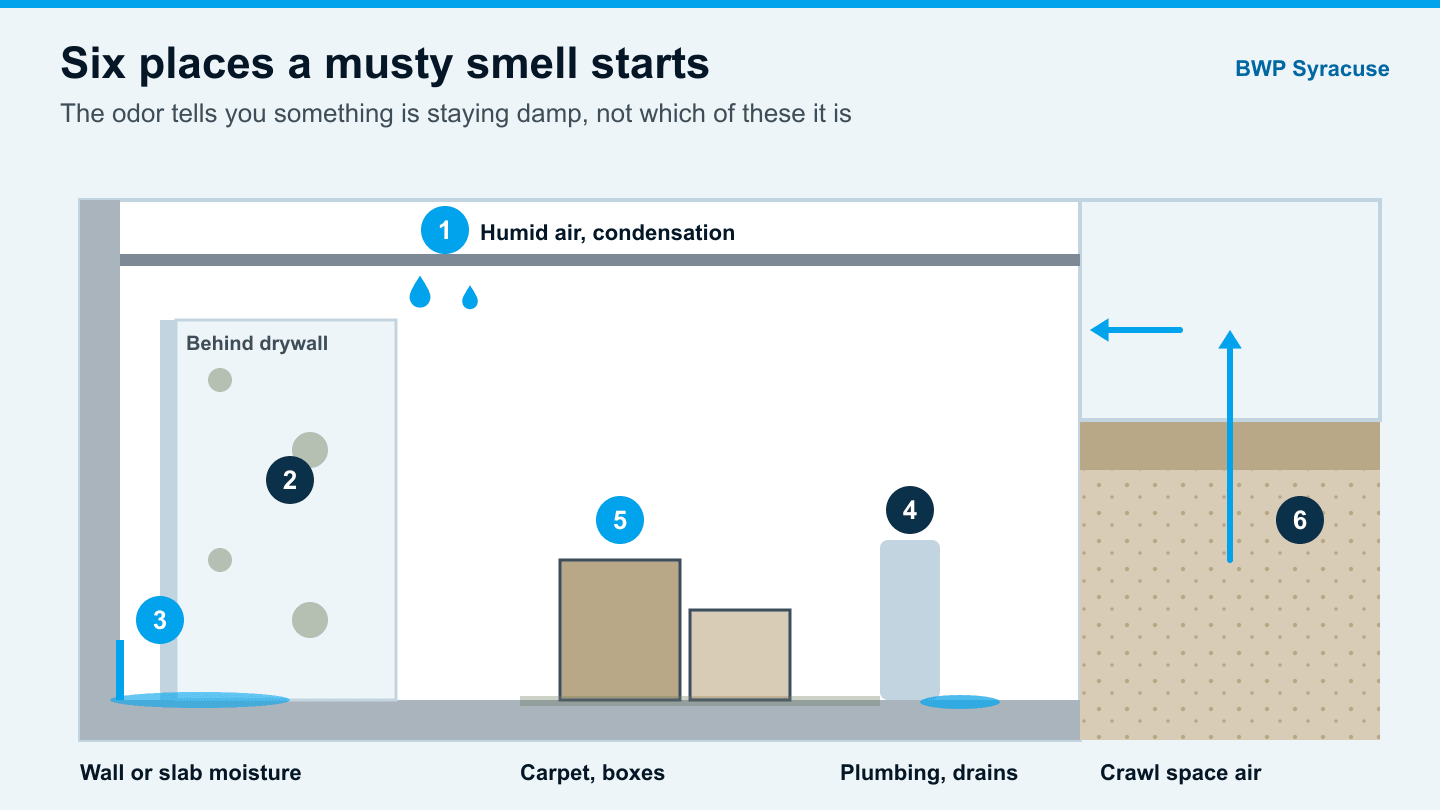
The full breakdown of those sources, and how to confirm each one, is in why a basement feels damp with no visible leak. If the main complaint is odor, the six causes of a musty basement smell covers the places that odor usually starts.
Humidity is the measurement that defines this category. The EPA guide to mold, moisture and your home (opens in a new tab) recommends keeping indoor relative humidity below 60%, ideally between 30% and 50%. A basement that sits above that range for weeks is damp even if the floor looks dry.
What a Wet Basement Looks Like
A wet basement has liquid water. It might be a thin dark line along the base of the wall after a storm, a trickle running down from a crack, a puddle that forms in the same corner every March, or carpet that is soaked along one edge. The water may dry up between events, which is why many homeowners describe a wet basement as “only sometimes.”
That intermittent pattern is the most useful clue you have. Wet basements generally come from one of three places:
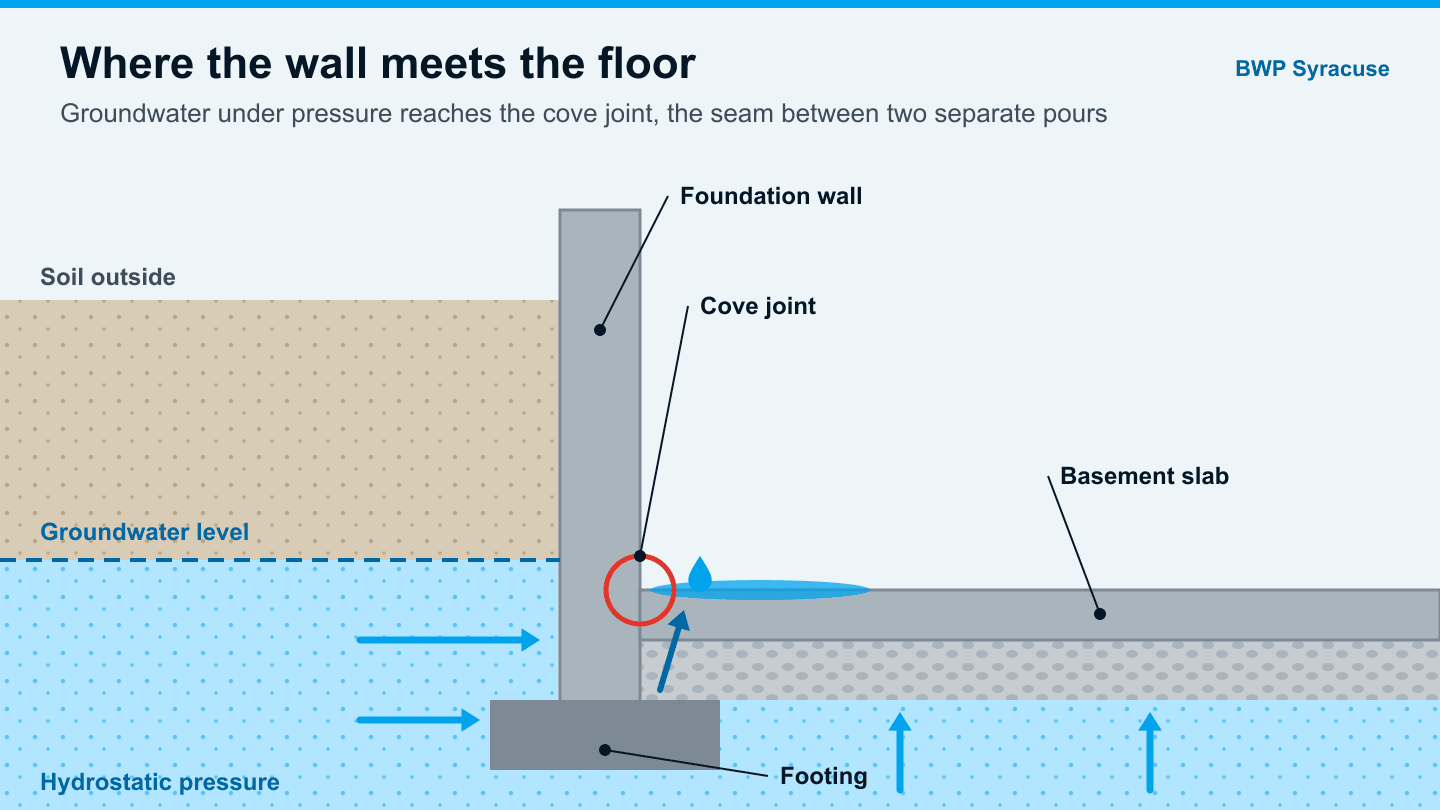
- Groundwater and surface water. Rain and snowmelt saturate the soil around the foundation. Water pushes against the wall and up under the slab, and it enters wherever there is a path, most often the cove joint where the wall meets the floor or an open crack. Water that appears hours after rain, or during a thaw, points in this direction.
- Crack or penetration leaks. A crack, a pipe penetration or a tie-rod hole lets water in at one specific point. The wet area starts narrow and spreads downward.
- Plumbing. Supply lines, drain lines, water heaters and washing machine hoses can all leak. Plumbing water does not follow the weather, and it often appears near a fixture.
Where the water first appears narrows the source. Water spreading along the wall-floor seam behaves differently from water running down one crack, and what water at the cove joint usually means explains that pattern in detail. The decision between sealing a single crack and relieving pressure along the whole perimeter is covered in crack repair or full drainage.
Plumbing or groundwater?
Timing does most of the work here. Water that shows up only after rain or snowmelt is unlikely to be a supply line. Water that shows up on a dry week, after laundry, or near the water heater is more likely to be plumbing.
A water meter check adds a second clue. The EPA WaterSense leak guidance (opens in a new tab) says to check the meter before and after a two-hour period when no water is being used, and that any change points to a probable leak in the supply system. A still meter does not rule out a drain leak, since drain lines only carry water when something is running.
What a Flooded Basement Looks Like
A flooded basement has standing water across a meaningful part of the floor, or water entering faster than it can drain away. It often comes with a clear trigger: a sump pump that stopped during a power outage, a sudden snowmelt, a burst pipe, or sewage rising out of a floor drain.
At this point the priority order changes. Before thinking about causes, repairs or insurance, think about electricity, gas and contaminated water.
Flooded Basement Safety: What to Do First
These steps follow published public-health and extension guidance. They are about keeping people safe, not about saving the basement.
- Stay out of the water until electricity is confirmed off. Cut the main power only from a dry spot. Otherwise call the electric utility or an electrician. Do not turn power back on until a qualified electrician has checked any equipment that got wet.
- Leave if you smell gas. Get everyone out and call the gas utility or 911 from outside.
- Treat the water as contaminated. CDC guidance warns that a flooded home may be contaminated with sewage. Avoid skin contact, keep children and pets away, and wash your hands after any contact. Water that came up through a floor drain or smells like sewage needs a professional cleanup, which EPA’s mold cleanup guidance also recommends for sewage-contaminated damage.
- Never run gasoline pumps or generators indoors. University of Nebraska-Lincoln Extension warns that gasoline-powered pumps and generators produce deadly carbon monoxide. Keep them outside and away from windows.
- Pump deep water gradually. The same extension guidance on pumping a flooded basement (opens in a new tab) explains that draining too quickly, while the soil outside is saturated, can let outside pressure crack or push in walls and floors.
- Document before you discard. Photograph and video the water line, damaged materials and appliances before anything goes to the curb. FEMA’s flood recovery fact sheet (opens in a new tab) lists photos, video and material samples as documentation for flood insurance adjusters. Other policies may have their own requirements, so check with your insurer.
- Start drying quickly and protect yourself. EPA’s flood cleanup guidance (opens in a new tab) says mold can grow on wood, drywall, carpet and furniture that stay wet for more than 24 hours. It recommends an N-95 respirator, goggles, gloves and boots during cleanup, and it warns never to mix cleaning products or add bleach to other chemicals.
In practice, the first hour of a basement flood goes better when somebody already knows where the main water shut-off, the electrical panel and the sump pump outlet are. Finding those on a calm day is worth ten minutes.
How to Tell Which Condition You Have
When there is no emergency, a short observation routine usually sorts damp from wet. None of these checks proves a cause on its own. They collect clues.
- Take humidity readings for several days. A basic hygrometer placed away from the dehumidifier and exterior doors shows whether the air is the problem. Consistently high readings with no liquid water point toward a damp basement.
- Dry a suspect area and watch it. Wipe a damp patch dry, then check it after the next rain, the next hot humid day and the next time the laundry runs. A patch that returns after rain behaves differently from one that returns on humid days.
- Mark the edge of any water. A pencil line at the edge of a wet patch shows whether it is growing, shrinking or starting from the same point each time.
- Note the timing. Write down the date, the weather over the previous two days and when you first saw the water. Groundwater tends to follow rain and snowmelt, plumbing does not.
- Check the sump pump and floor drains. A pump that runs constantly, runs and stops too often, or does not run at all during a storm tells you something. So does water around a floor drain rather than along a wall.
- Look behind stored items and finished walls. Water often appears first under boxes, along carpet tack strips or at the bottom of drywall, well before a puddle forms.
These checks have limits. A hygrometer cannot see seepage behind a finished wall, and a dry week can hide a wet basement completely. When the results conflict or the water keeps returning without an obvious pattern, a professional moisture inspection is the more reliable next step.
The Syracuse Pattern: Why Timing Matters Here
Syracuse basements often show their condition on the calendar. During the late winter and early spring thaw, snowmelt saturates the ground around foundations at the same time the soil below may still be partly frozen. A basement that stays dry most of the year and gets wet every March is telling you more about groundwater than a single photo of a puddle can.
Summer tells a different story. The same basement can read high humidity in July and August, with sweating pipes and a musty smell, because warm humid air reaches cool below-grade surfaces. That is the damp category, and it can overlap with a wet spring in the same house.
Storms add a third pattern. When the power goes out during heavy rain, a sump pump stops, and a basement that was simply wet can flood within hours. In practice, that is one of the most common routes from wet to flooded.
What a Dehumidifier Can and Cannot Do
A dehumidifier is the right tool for a damp basement. It pulls water vapor out of the air, lowers relative humidity and helps materials dry. After a leak or flood has been fixed and cleaned up, it speeds up drying.
A dehumidifier cannot stop liquid water. Groundwater pushing through the cove joint, a crack that leaks after every storm and a supply line dripping behind a wall all keep delivering water no matter how hard the machine runs. A dehumidifier that runs constantly, fills its bucket every few hours or never reaches its setpoint is often a sign that the basement is wet, not merely damp.
What Does Not Work
A few common responses make the problem harder to solve:
- Calling standing water “just humidity.” Humidity does not create puddles on a floor. Condensation can wet surfaces, but water collecting at the base of a wall points to an entry point or a leak.
- Mopping up and moving on without notes. The timing and location of the water are the best diagnostic evidence you will get. Once it is cleaned up without a photo or a date, that evidence is gone.
- Painting or sealing a wet wall. A coating over an active water path traps moisture behind it, and the paint lifts or blisters while the water keeps moving.
- Using bleach as a cleanup plan. EPA does not recommend biocides such as chlorine bleach as a routine practice for mold cleanup, and bleach does nothing about the water source. Bleach mixed with ammonia-based cleaners produces toxic fumes.
- Turning the power back on too early. Wet electrical equipment needs inspection by a qualified electrician before it goes back into service.
Who to Call for Each Condition
The right professional depends on the condition and the source, and a single house may need more than one.
- Damp basement: often manageable with humidity monitoring, dehumidification and removing damp materials. A persistent problem that does not respond is worth an inspection to rule out hidden seepage.
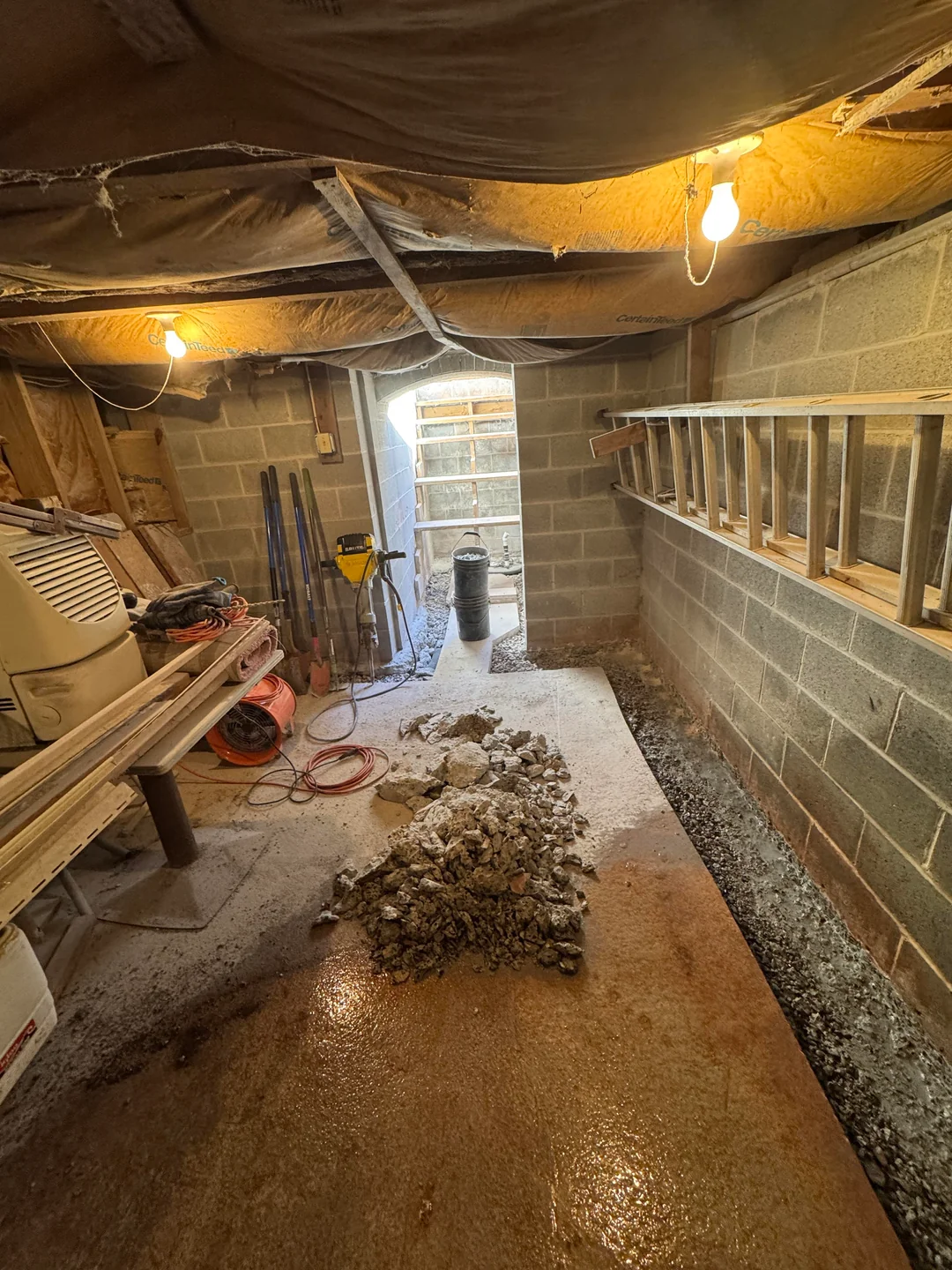
- Wet basement from groundwater or cracks: a foundation moisture contractor who can identify the entry point. For recurring groundwater at the cove joint or under the slab, that usually means evaluating interior drainage and basement waterproofing.
- Plumbing leaks: a licensed plumber.
- Sewage backups: a plumber for the drain line, and a professional cleanup company for contaminated materials.
- Electrical exposure: the electric utility and a licensed electrician.
- Large mold growth: EPA guidance suggests that areas larger than about 10 square feet are generally better handled by professionals with the right experience.
- Walls that have visibly moved or bowed: a structural engineer, before any waterproofing is planned.
Still not sure whether you are dealing with damp air or water entering through the foundation? A free moisture inspection can separate condensation, seepage and plumbing before you choose a repair, and it starts with where and when the water appears.
The Label Decides the First Step
Damp, wet and flooded are not steps on the same ladder. They are different conditions with different causes, and the fix for damp air is not the fix for groundwater covering the floor. If the broader warning signs are still unclear, the nine early signs a basement shows are a good place to compare notes before deciding which of the three you have.
Frequently Asked Questions
Is a damp basement normal?
Some extra moisture is common in a below-grade room, since the walls and slab sit against soil and stay cooler than the rest of the house. A basement that stays above 60% relative humidity, smells musty or grows mold is not something to accept as normal. EPA guidance recommends keeping indoor humidity below 60%, and the guide to ideal basement humidity explains how to measure it properly.
How fast does mold grow after a basement floods?
EPA flood guidance says mold can grow on wood, drywall, carpet and furniture if they stay wet for more than 24 hours. EPA also notes that materials dried within 24 to 48 hours usually do not grow mold. Treat that window as a reason to start drying quickly, not as a guarantee either way.
Should I pump out a flooded basement right away?
Not always. Pump a deeply flooded basement gradually when the ground outside is still saturated. University of Nebraska-Lincoln Extension warns that draining too quickly lets the water pressure outside the walls exceed the pressure inside, which can crack walls and floors. Shallow water from a burst pipe is a different situation, and removing it quickly limits damage.
Can I turn off the breaker if my electrical panel is in the basement?
Only when you can reach the panel from a completely dry spot. CDC guidance says that if you must enter standing water to reach the main power switch, call an electrician to turn it off. Your electric utility can also disconnect service from outside.
Will a dehumidifier fix a wet basement?
No. A dehumidifier controls moisture in the air, but it cannot stop liquid water entering through a crack, the cove joint or the slab. It is the right tool for a damp basement and a useful drying aid after a leak is fixed, not a repair for recurring seepage.
How long does it take a flooded basement to dry out?
With water removed, fans running and a dehumidifier going, a flooded basement usually takes several days to a couple of weeks to dry. EPA advises drying water-damaged areas within 24 to 48 hours to prevent mold growth, so anything porous that cannot be dried in that window, such as carpet pad or soaked drywall, is often better removed.
Does a wet basement always need professional help?
No, a single wet episode after a blocked gutter or a burst pipe may only need the cause fixed and the space dried. Water that returns with every heavy rain or every spring thaw is different. That pattern points to water entering through the foundation, which a dehumidifier or a surface sealer will not stop.